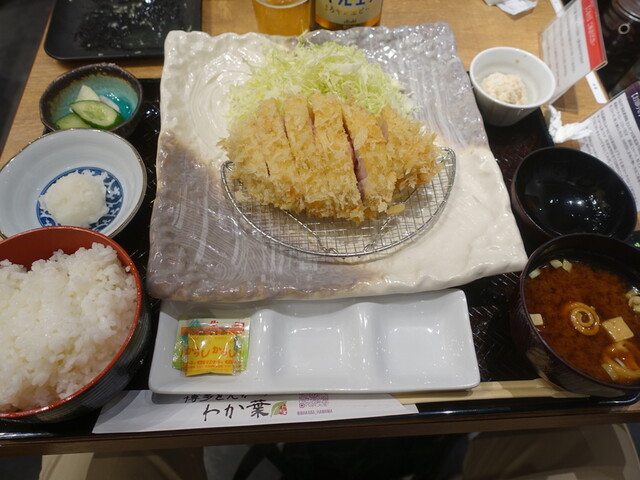
We are having lunch at "Hakata Tonkatsu Wakae", located in the Japan Life Creatawa Tower adjacent to Hamamatsu Station. The restaurant is situated on the ground-floor restaurant floor. Even though it's called the restaurant floor, there are only three other establishments on this level: "Wakae", "Sapporo Honpō", and "Yijō-ya Pin".
“わか葉”は、とんかつを専門とする有名店として選ばれた福岡天神の人気レストランが東京に進出した店です。天神本店のほかに、福岡には3店舗、東京にも表参道に1店舗があり、合計で6店舗あります。2024年10月にオープンするばかりの新しい店舗です。
I arrived at 12:50 on a weekday, and the restaurant was already full. There was only one empty counter and one two-person table. Most customers seemed to be ordering the cheaper version of lunch don katsu. However, it is said that the lunch set meals, dals, and katsu curry use American pork. Still, they are quite delicious. Since I have the chance, I decided to try the premium pork.
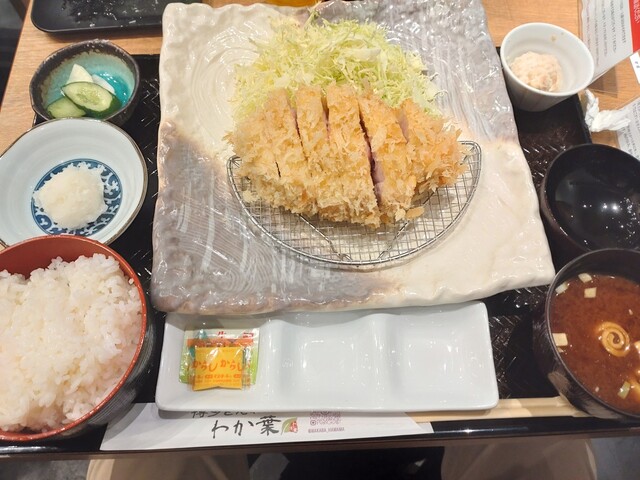
Branded Pork Top Roasted Meal Set: 2,450 yen
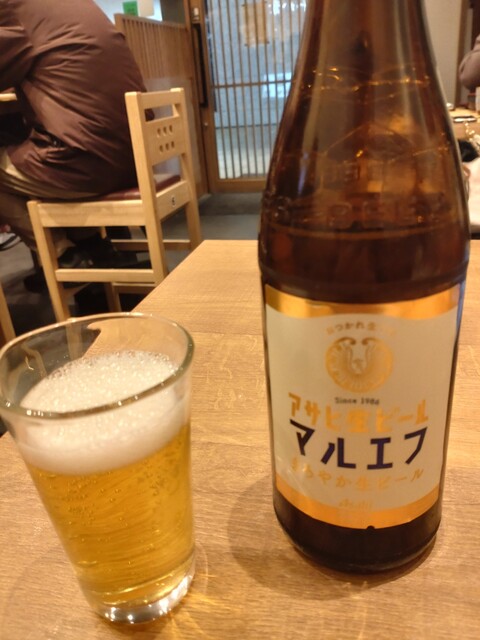
Bottle Beer Malef 800 Yen
I hesitated between the "Teppou Riburos" priced at 3,150 yen and the "Ue Rosu". I forgot to ask about the specific breed of pork used. In a store in Fukuoka, it seems to be black pork from Kagoshima or Okinawa. But in Tokyo, it's probably坂東もち豚.
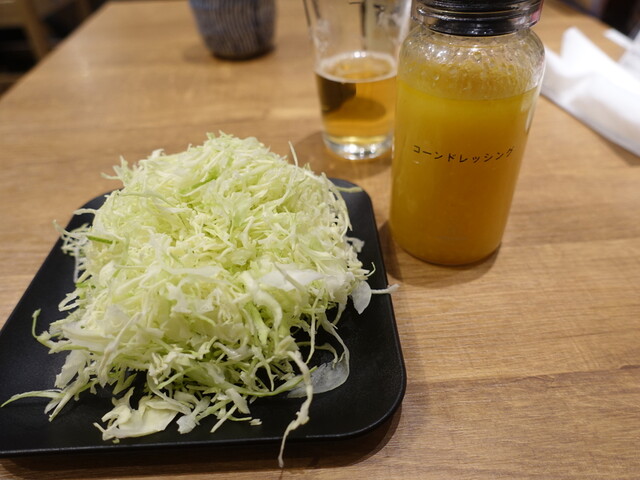
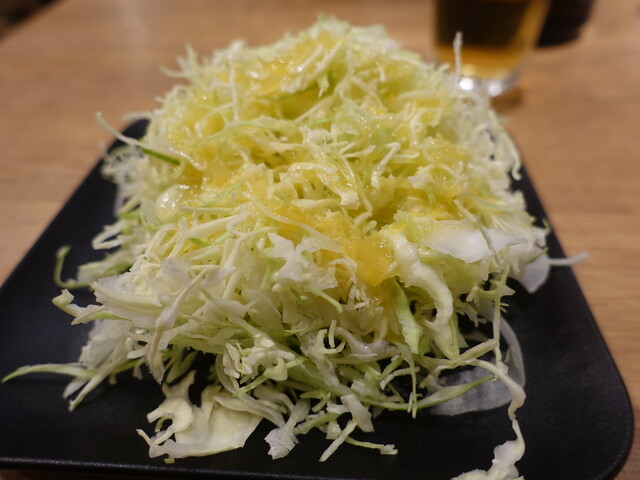
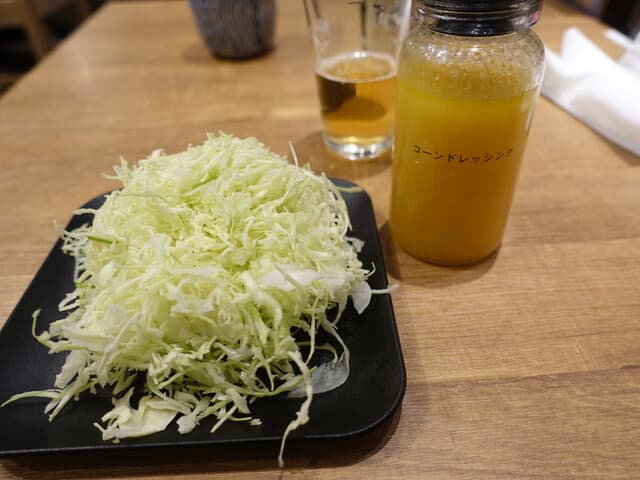
The beer was just ordinary, not chilled in a regular cup. It’s awkward to drink it without any other food to accompany it, so I asked for cabbage as an appetizer first. The cabbage was just average, but the dressing with corn flavor was delicious. While salads with corn are common, this is the first time I've tried corn dressing. The acidity and sweetness of the corn perfectly complemented each other, making it extremely delicious.
While I was almost finished drinking the beer with the kondo dressing, as it was mentioned that deep-fried dishes take a long time to cook, after waiting for 25 minutes, the top layer of pork was ready. Oh, what a beautiful white-yellow fried color! It’s not completely white; there’s a slight brownish tint. Since it weighs 180g, it isn’t particularly large. When I turned it over to see the inside, wow, what a beautiful pink color! The pork, fried at low temperatures, has turned into a stunning rose-colored dish. I immediately tried it. Oh, it’s soft and extremely juicy. The juices from the meat overflowed. This pork with its sweet taste and plenty of juices is delicious. This dish really pairs well with pink rock salt.
Next, dashi oroshi with salt and ponzu sauce. It's a transparent ponzu sauce. This is my first time using transparent ponzu sauce. Combined with dashi oroshi, it creates a refreshing taste that makes tontoka delicious to eat. Quite tasty indeed.
Wasaibia Soy Sauce. Here, there is a transparent soy sauce available. When I lick it, it’s transparent, but it definitely has a salty taste reminiscent of soy sauce. Hmm… Whether used as ponzu or soy sauce, it seems to be suitable for those who prefer transparency. This Wasaibia Soy Sauce pairs well with the rare pink-colored loin of pork. With Wasaibia Soy Sauce, the Japanese flavor becomes more pronounced, making it a perfect match for the juicy pork.
The rice used in this dish is said to be the rare variety called "Dragon's Eye". It is known for its sweetness and stickiness. However, it seems that there was a bit too much water in the rice, which made it slightly difficult to eat. I prefer rice that is well-structured with distinct grains. This dish, however, falls into a different category. The miso soup has a strong salt taste, and it's a red-based broth. As a side dish, there's potato salad with ground meat. If fried, it would make great croquettes—a delicious combination.
The remaining roasts were served with a sauce. Yes, it was a light and fruity sauce with a strong acidity. Since the famous breed of pork is known for its tender meat, the sauce seemed a bit too strong for me. I prefer a sauce that is slightly sweeter as well.
Since it's a special occasion, let's have an extra serving of rice. Initially, the portion was large, so for the second serving, we chose a normal amount. To finish the meal, we added miso soup, cucumbers, and radish pickles.
The tonkatsu was quite delicious. The pink color of the cut surface was extremely beautiful, and the tenderness of the meat was truly impressive.
However, white tonkatsu prepared through low-temperature cooking is offered by many restaurants, and it’s not something particularly rare. The juicy flavor of the meat was good, but perhaps it would be better to stick to a reputable breed of pork for this dish. Since the price is relatively high, it’s easier to make a clear distinction by using a distinctive breed of pork as the main feature of the dish.
I thought that maybe a cheaper lunch set meal would be just as good.