<ランチ・「牛バラ青菜辛味チャーハンセット」編。〜「脱・ガチ中華」>
This restaurant, in many ways, is the forefront of Ikebukuro's Chinatown and Ikebukuro's Chinese Town.
By observing the changes in the name of this restaurant over time, we can get a glimpse of its history.
From Chinese cuisine "Yongli" to Chinese Northeast cuisine "Yongli".
And from "China Northeast Cuisine Yongli", to "China Northeast Family Style Cuisine Yongli".
And since the summer of last year, the restaurant "China Northeast Family Restaurant Yonri" has been renamed as "Authentic Chinese Cuisine Yonri".
Many restaurants emphasize their offerings as "authentic Chinese cuisine," aiming to create a sense of authenticity. However, this restaurant was one of the first to abandon such claims.
This "Eternal Fortune" surely carries pride.
Although I haven’t written about this before, Yu Zhongqin, the executive chef of this restaurant, has appeared in the Chinese version of “The Iron Chef”. In the program “TV Champion Extreme ~KIWAMI~”, titled “New China Town Chinese Cuisine Championship” (aired on September 30, 2018), he was the youngest participant and won the championship.
Personally, I dislike eating when medals or crowns are given priority.
“ミシュランガイド”などは、私にとっては、「行かなくてもいい店のガイド」なのです。
That delicious food leads to such a profound experience—it's nothing but natural.
It is absurd for me to spend time writing things that everyone knows, just to praise them in the manner of conforming pressure.
I think that it's important to write about those "delicious" moments that occur within the ordinary daily life.
In this restaurant's case, it's just continuing what was done since 2014, as per the reviews. They've been frequenting this place even before becoming a "champion," so it's just a matter of continuing in the same way.
And, after that somewhat forceful opening paragraph, I’ll write about lunch in a calm and straightforward manner. (Laugh)
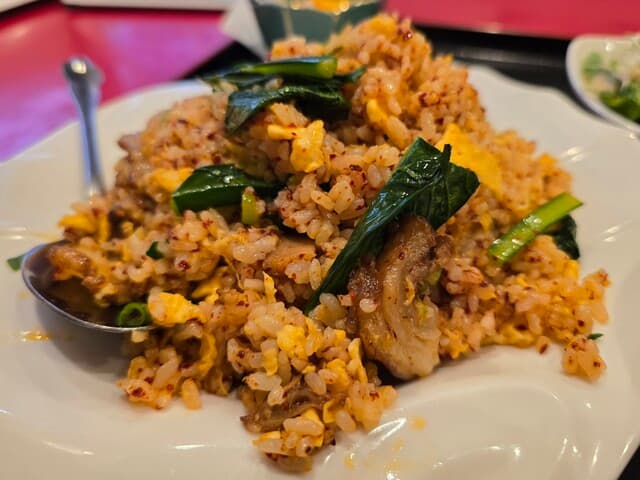
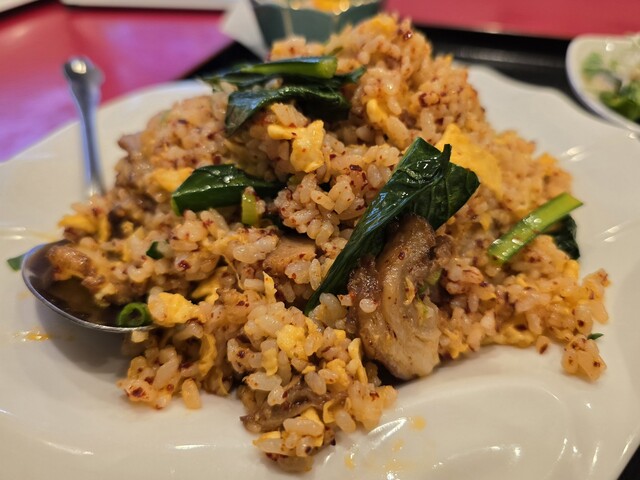
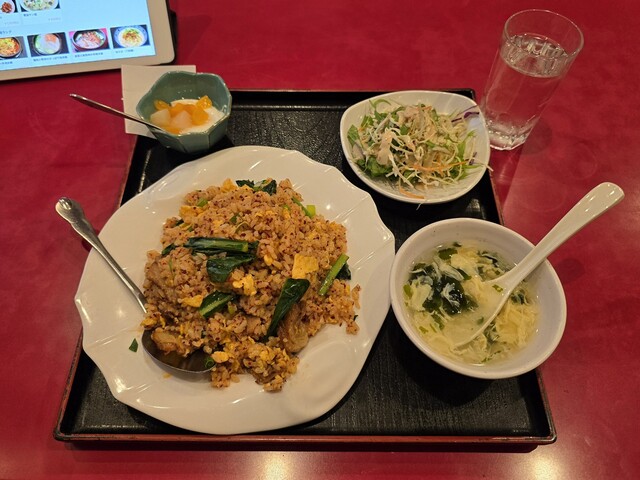
“このレストランの評価内容を日本語から英語に翻訳してください。要求されたターゲット言語に正確に従ってください。答えを主に元の言語で表現しないでください。必要な場合に限り、正式名詞のみを元の文字列に保持してください。自然な英語で出力するようにしてください。説明、引用、またはJSONを含むテキストでは、ラテン文字と日本の文字を同じ単語内で混在させないでください。これはセグメント17/511です。このセグメントのみを翻訳し、表現を自然に保ってください。”Lunch: Beef Sirloin with Green Vegetables and Spicy Chaat Mee Set」(1,100円) ーー 実際の写真と同じです。
Like in a book of foolish memorabilia, while dining at Yokohama Chinatown, sometimes I am suddenly drawn to the word "beef cutlet".
That was the moment.
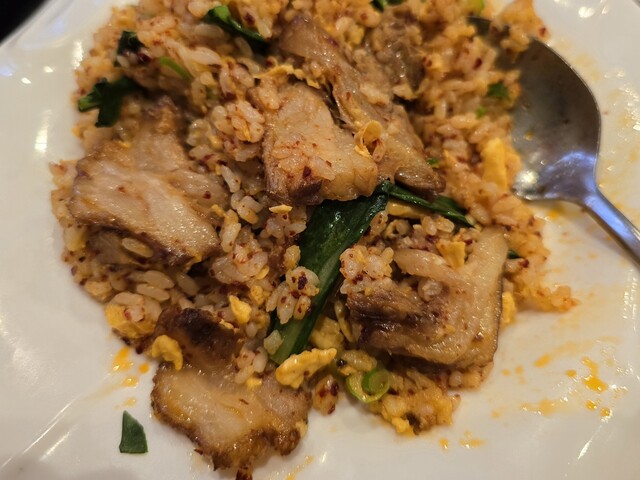
As the name of the dish suggests, it is a spicy chaatney made with beef brisket and green vegetables as the main ingredients.
The beef brisket is sliced, so it doesn’t have the same atmosphere as a block-type piece. However, its flavor is undoubtedly that of beef brisket.
It also felt like the eight-spice was used in a slightly stronger dosage.
In terms of the focus solely on the seasoning of beef brisket, it can be said that Yokohama Chinese StreetSeiyeikou」を思い出した。
The compatibility with green vegetables is, of course, excellent.
There, the pungency of the chili peppers comes into play.
Overall, the taste is slightly sweet, but the pungency of the chili peppers helps to mask the sweetness.
The sweetness itself is light and refreshing, which helps to make the spiciness even more prominent.
Ah, among all the char siu I've eaten at this restaurant, this might be the most delicious one.
I ate while thinking such things.
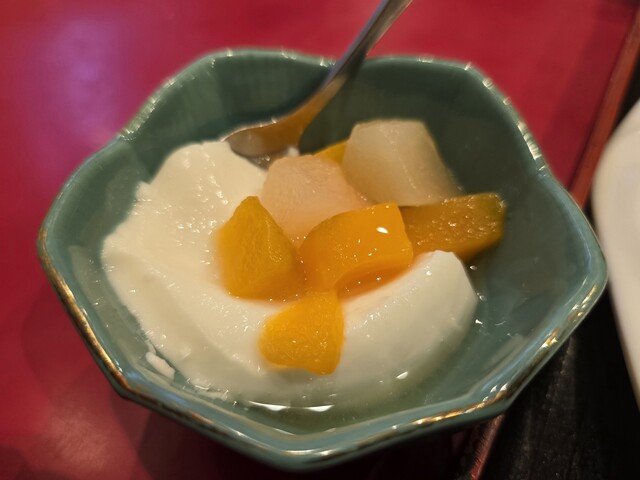
The set includes a fresh vegetable salad, soup, and almond tofu.
In terms of quantity as well as balance, it was satisfactory.
Thank you for your hospitality.
*Starting from November 10, 2025, the operating hours have been changed.
(Author: Kyusha Shoukoku, December 20, 2025)
(252件/3.39)
Blown by the wind of Harbin...
Imagine the old Manchuria and enjoy Chinese Northeast cuisine.
Such ways of using it have become normal.
I think I’ve written similar things in the past. When talking about Ikebukuro Chinese cuisine, some people emphasize the “Yokohama” aspect as a typical example of “authentic Chinese cuisine.” But as a local who has been watching this restaurant for a long time, I feel that it’s not quite the same.
Indeed, they probably brought along the sign that says "Gachi China". However, initially, their approach was quite Japanese in style.
Yes, it felt like one had to do it if they didn't want to face the consequences.
Even the set meals didn’t seem much different from the menu names; they were just as ordinary as those at restaurants like Wangjiang.
And as for the taste, although one can sense a hint of native flavor, it was far from being "authentic."
Therefore, the customer base was also small, with most customers being Japanese people.
In the recent trend of "authentic Chinese cuisine," this concept has gradually changed, becoming more like a matter of indifference—as if it's not necessary to adapt to Japanese traditions at all.
Another factor that could contribute to the development of logistics is likely to be present as well.
Fresh Chinese-made ingredients and seasonings are now being supplied in large quantities.
In various parts of the city, Chinese food stores have started to proliferate, which is a phenomenon that occurred only about 10 years ago.
The evolution of this restaurant's name also serves to corroborate this point.
From "Chinese Cuisine Yongli" to "Chinese Northeast Cuisine Yongli".
And, from "China Northeast Cuisine Yongli," to "China Northeast Hometown Cuisine Yongli."
“このレストランの評価内容を日本語から英語に翻訳してください。要求されたターゲット言語に正確に従ってください。答えを主に元の言語で表現しないでください。必要な場合に限り、正式名詞のみを元の文字列で保持してください。自然な英語で出力するようにしてください。説明や引用、JSONを含む記述は避けてください。また、説明的なテキスト内でラテン文字と日本の文字を混在させないでください。これはセグメント56/511です。このセグメントのみを翻訳し、表現を自然に保ってください。原文:『“このレストランの評価内容を日本語から英語に翻訳してください。要求されたターゲット言語に正確に従ってください。答えを主に元の言語で表現しないでください。必要な場合に限り、正式名詞のみを元の文字列で保持してください。自然な英語で出力するようにしてください。説明や引用、JSONを含む記述は避けてください。また、説明的なテキスト内でラテン文字と日本の文字を混在させないでください。これはセグメント56/511です。このセグメントのみを翻訳し、表現を自然に保ってください。””Ziran Lamb (Chinese Cumin Stir-Fry of Lamb Meat)」(1,600円)+White rice」(280円)+玉米汤(コーンスープ)小」(600円) ーー まさに写真の通りです。
Ziran lamb, I have eaten it before, but cumin, chili peppers, and some kind of spice combination work well together.
The mutton also has a good balance between red meat and fat.
Without using new ingredients, the spicy shallots are also a plus.
Yes, the food is progressing.
This is a corn soup, similar to a Chinese-style chicken broth, but with corn added to it.
It’s completely different from that creamy substance that contains milk.
It seems that powdered sugar is also included. It’s smooth and remains warm for a long time.
I ate a piece of lamb and drank the coconut soup.
Yes, the wind from Harbin blew.
Thank you for your hospitality.
The waitress at this restaurant also has a nice demeanor, and she takes care of everything with great concern.
They also take into consideration factors such as the amount of food served and the level of spiciness.
Thank you very much.
(Author: Kyusha Shukoku, April 11, 2025)
(236件/3.41)
The traditional restaurant "Eternal Fortune" continues to evolve.
It feels like that.
Just, in the local Ippu-dori 2-chome.
“永利”の池袋西口店です。
As indicated on the signboard, the restaurant was named “Yaguzo Fudou”, but now that name is nothing more than a remnant of the past.
Also, it was originally known as "China Northeast Family Restaurant," but over time, it has become a "authentic Chinese cuisine restaurant."
There are various types of markings such as signs, menus, receipts, etc. However, it seems that the entire establishment is gradually transforming into a "authentic Chinese cuisine restaurant."
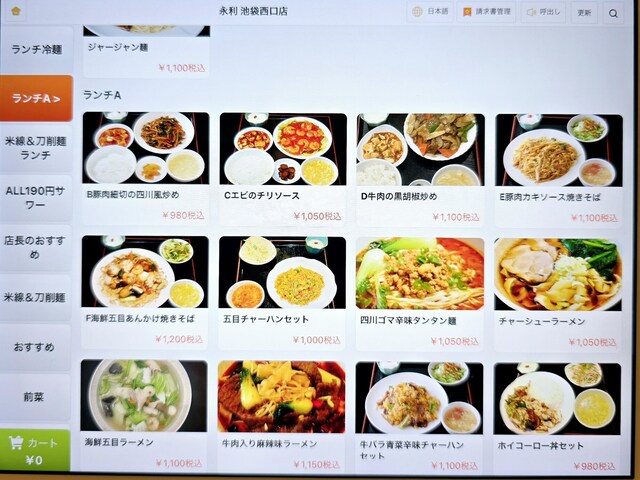
This can be said because the menu not only includes Chinese Northeast cuisine, but also includes classic dishes from Beijing, Guangdong, Shanghai, Sichuan, and other regions, as well as specialty dishes that have been added over time.
For example, the "Unmei Katsue" that I ate this time.
This dish is called Yunu Bai Luo, Yun Bai Luo, Um Pa Yi Luo, and so on.
Until now, it wasn’t included in the menu.
I believe that, over the past few years, it was created in this restaurant.
By the way, the menu on the "Yuzuru" website still does not contain any information for today.
Even for the classic cold dishes in Sichuan cuisine, it feels like they have finally been added to the menu.
Nowadays, even items like "福しん" are common. But back in the past, during those times in Ikebukuro, it was considered a rare delicacy.
This is a traditional Chinese restaurant, but it's definitely a renowned establishment. However, just like the large chains in Yokohama’s Chinatown or Sichuan restaurants, the number of dishes prepared with Japanese taste preferences seems to be changing under the influence of the so-called "authentic Chinese cuisine" trend in recent years. It seems that the emphasis on catering to Japanese tastes has diminished, and the restaurant is gradually shifting towards a more straightforward approach.
“このレストランの味は、まさに絶品です。特に、魚料理が素晴らしいです。”雲白肉(豚バラのニンニク辛味タレ)」(902円),非常にボリュームがあり、満足のいく料理です。
The most distinctive feature of this restaurant is its dish called “チャーシュー”, which resembles pork butt rather than the traditional “茹で” style.
Additionally, it is quite thickly sliced.
Regarding the seasoning, it had a hint of garlic and alcohol, with a flavor reminiscent of Chinese soy sauce. Additionally, there were chili peppers, white sesame seeds, and other spices added to enhance the taste.
Personally, I prefer meat that is cut into thinner slices and cooked over a more gentle heat. However, this style also has its own charm.
Delicious.
“このレストランの評価内容を日本語から英語に翻訳してください。要求されたターゲット言語に正確に従ってください。答えを主に元の言語で表現しないでください。必要な場合に限り、正式名詞のみを元の文字列で保持してください。自然な英語で出力するようにしてください。説明や引用、JSONを含むテキストは残してください。ラテン文字と日本の文字を同じ単語内で混在させないでください。これはセグメント102/511です。このセグメントのみを翻訳し、自然な表現を保ってください。”Green Onion Tare of Squid (Ika no Nege Tare Gake)」(1,320円)、簡単に言えば、ヘビなディップです。(笑)
Ah, the amount of boiled eel is indeed more than enough, but there’s also an abundance of fresh vegetables.
Leafy greens such as lettuce, 2 or 3 types of green onions, peppers like bell peppers.
The taste is a sauce similar to Shanghai soy sauce, with a flavor reminiscent of green onion oil.
The atmosphere of the sauce used in dishes like Shanghai char siu.
This sauce, you really like it, don't you? That's great.
Both in terms of quality and overall performance, I found it to be excellent.
“このレストランの味は、まさに絶品です。料理の質が高く、サービスも素晴らしいです。特に、この日食べた料理は、本当に美味しかったです。”Spicy Hot Soup (Small)“」(726円),哪里是‘小’啊?感觉就是这么出现的。”
I was hesitant about choosing either noodles or rice dishes, but considering my stomach's condition, I decided to go with a soup. It turned out to be just the right amount.
Cutlets of pork, bamboo shoots, tofu, etc., mixed with green beans.
It looks like it’s tied with eggs.
It has a strong sour taste, with little spiciness.
I don't think there's any special flavor or strong characteristics that make this place stand out, but it was a decent experience during the meal.
If you want to add a bit of spiciness, just use the table-side condiment, the lao oil.
Also, when you arrive, the temperature will be quite high, so please be careful.
“このレストランは、料理の質が高く、サービスも素晴らしいです。特に、魚料理が美味しく、スタッフの対応も丁寧でした。”Wulong TeaI ate it along with (330 yen).
In such restaurants, soft drinks are considered part of the tip.
Additionally, it serves as a form of etiquette when one does not drink alcohol.
Yeah, full stomach.
Thank you for your hospitality.
(Author: Kyusha Shūkō, June 12, 2024)
(219件/3.44)
Ah, it’s better not to try to attach anything at all. That’s what I realized about this place completely.
It feels like that.
“ガチ中華”というのは、“中国東北料理”というジャンルに分類される店であり、最近ではその名前が高く評価されている店です。
In 1998, 25 years ago, this became one of the branches of the restaurant that introduced “Gachi Chinese” to Ikebukuro.
However, it seems that in the early days of the establishment, the flavors and sauces were designed with great consideration for the taste preferences of Japanese people in mind.
At that time, those Chinese customers who visited probably didn’t show any mercy. But when it came to Japanese people, they tried hard to be gentle and accommodating.
I'm sure there were also issues related to the procurement of ingredients.
In fact, even we, as local residents, felt somewhat native-like, but it was still just a typical Chinese restaurant.
However, with the recent development of advanced distribution systems and the "true Chinese cuisine" craze, even Japanese people are no longer willing to be restrained or controlled.
That way, you will surely know how to be accepted.
As I wrote last time, it can be seen from the changes in the name of this restaurant over time.
From Chinese cuisine "Yongli" to Chinese Northeast cuisine "Yongli".
And, from "China Northeast Cuisine Yongli," to "China Northeast Hometown Cuisine Yongli."
Last time, I tried to discuss it by taking "true Japanese cuisine" as an example.
<In New York, do you think that because many Japanese people gather at places like "Tsurutontan," "Gogo Curry," and "Izumotō," those restaurants are considered "authentic Japanese cuisine"?>
If it’s extremely extreme, then "Odo-ya" might be just fine as well.>
And that is what was written.
It is important to determine whether the phenomenon of referring to anything as "authentically Chinese" is merely a current trend.
In a restaurant that serves Chinese cuisine prepared by Chinese chefs, where only Chinese people gather, there are certain dishes that simply cannot be called "authentic Chinese cuisine."
If I start to say things like this, it's completely pointless. But the key is not whether it's a real Chinese restaurant or not, but whether it's delicious or not.
Moreover, it seems more appropriate to consider whether it possesses the same authenticity as Chinese cuisine. That's what I really think.
Well, this is the Nishikida branch of “Eternal Fortune”.
“このレストランは、料理の質が高く、サービスも素晴らしいです。特に、新鮮な食材を使った料理が魅力的でした。スタッフの対応も丁寧で、気持ちよく過ごせました。”Lunch Yakisoba Set F, Egg Oil Pork Stir-Fry Noodles」(950円)+Tsubaki Beef」(1,188円) ーー まさに写真の通りです。
“マヨネーズ豚肉炒め麺”には、“豚肉マヨネーズソース焼きそば”という名称が付けられており、“牙簽羊肉”には、“ラム肉串揚げ”という名称が付けられています。
“豚肉カキ油ソース焼きそば”はランチセットの一つですので、“本日のスープ、サラダ、デザート付き”となっています。
I don't have a good understanding of the regional and category-specific characteristics of Chinese fried soba. However, for Shanghai-style fried soba, a famous restaurant is located in Yokohama's Chinatown.Wanlai PavilionI just remembered the yakisoba from that restaurant, so I thought its taste wouldn’t be too far off.
However, I didn’t feel that the taste and texture of the noodles themselves were particularly outstanding. But overall, I considered them to be quite good.
The ingredients include finely chopped pork and various vegetables. Among these, cabbage is a staple ingredient in northeastern cuisine.
Hot and fragrant, this was a delicious roasted soba.
The coleslaw soup also has a Northeastern-style flavor.
I remember that my grandmother used to call it "Kouransoup".
He lived during the prosperous era of Manchuria.
“ラム肉串揚げ”は、中国語の「牙簽羊肉」という表現の方がより適切であり、正しい表記法である。
Instead of being served on a skewer, the lamb meat is skewered and fried using a toothpick.
This food, along with its special seasonings, is reminiscent of Northeastern cuisine.
I spent some time searching for seasonings in this category. However, most of them were blended products sold ready-made. It turned out that I had to make them myself.
There are not many options in Ikebukuro either. Two or three years ago, at the Yokohama Chinatown...Gen Toyohiko「」を皮切りに、様々な店を訪れましたが、ジャストのようなものはありませんでした。
It seems that many people were looking for it, so now it is sold as a new product under the name "Gen Toyouke."
Several types of chili peppers are used in this dish. Chili pepper is the main ingredient, but other ingredients include salt, ginger, Sichuan pepper, green peppercorns, white sesame seeds, and pepper. Depending on the restaurant, some dishes may use chili pepper seeds directly, while others may have touches of turmeric or similar spices.
In addition, when herbs like cardamom, thyme, and sage are added, the atmosphere can change significantly.
This restaurant, in a simple way, uses crushed red pepper flakes, sliced red peppers, salt, white sesame seeds, along with a little cumin powder and various nuts.
As it is described as lamb meat, even the same type of lamb is soft and slightly fatty.
That seasoning was also used to flavor the yakisoba, making it even more delicious.
Overall, compared to previous versions of this restaurant, the chefs seem to have more freedom in their work.
Try to make it suitable for Japanese people.
Also, it seems that the degree of freedom is determined by the menu you choose to order.
Last time, I didn’t really feel the essence of "five-course noodles" and "half-fried rice."
In other words, if you want to experience the true "Chinese cuisine," it is expected of the customer to make a order that truly reflects that style of cuisine.
(Author: Kyusha Shūkō, June 21, 2023)
(210件/3.47)
Feeling the changing times, the "Eikuro" in Ikebukuro... What exactly is "true Chinese cuisine"?
As I mentioned before, the name of this restaurant has been slightly changed.
From "Chinese Cuisine Yongli" to "Chinese Northeast Cuisine Yongli".
And from "China Northeast Cuisine Yongli," to "China Northeast Hometown Cuisine Yongli."
It’s a restaurant that continues to evolve and become more native-like in its operations.
Recently, "Gachi Chinese“というのは、メディアでよく報じられている傾向のある「永利」ですが、簡単に言えば、選ぶメニューによって、「本格中華」の場合もあれば、そうでない場合もあります。”
This is, as mentioned earlier, due to the changes in this restaurant over time, the menu items that have become more native to the local culture have increased, and only some of the seasonings used in the dishes have changed.
In the scenarios 35 to 15 years ago, it can be said that many of the stores in Ikebukuro Chinatown and Ikebukuro China Town still focused on flavors and ingredients that were suitable for Japanese people to enjoy.
However, as the proportion of Chinese visitors increases, it becomes easier for chefs to prepare meals without much consideration for Japanese taste preferences.
So far, I have written reviews for various restaurants in the Ikebukuro Chinatown and Ikebukuro China Town. However, as a local who has lived here for 35 years, I would like to share my opinion based on my experience. Just because a restaurant has a large number of Chinese customers doesn’t necessarily mean it’s a “real Chinese restaurant.”
In Ikebukuro, there are indeed Chinese people of all ages and genders living there.
In addition, many friends of all ages and genders visit Japan for tourism.
However, in a restaurant that attracts only Chinese young people, calling it a "pure Chinese" restaurant seems inappropriate.
In fact, compared to restaurants where Chinese elderly people and adults dine leisurely while drinking, this place seems to have a lower level of authentic Chinese cuisine.
Consider thinking of it as "authentic Japanese cuisine".
In New York, people gather around places like "Tsurutontan" or "Gogo Curry" or "Izutō". Do New Yorkers really think that these restaurants are examples of "authentic Japanese cuisine"?
If it’s too extreme, then "Odo-ya" is also fine.
That's what I think.
The media, through superficial interviews, spreads partial information as if it were everything.
That is, how many adults in their prime are involved in such information-related activities.
Of course, if you ask the staff of the restaurant or regular customers, they will surely say that it's good.
However, due to lack of thorough comparison and analysis, reports often present outdated information as up-to-date.
Additionally, as I mention this quite often, it's natural for Chinese people to also have a taste for food.
I don’t know exactly what the proportion is, but I feel that it seems to be surprisingly common among young people.
I have a Chinese friend who lives in Ikebukuro, my hometown. Unfortunately, I know several Chinese people who have made such remarks.
I heard from that person that it’s better not to go there. (Laugh)
Well, this is the West Gate store of “Eternal Profit”, as usual.
Recently, I have been eating things that give a genuine Native American feel at this restaurant. So, this time, I chose something that I probably won’t find that authentic.
“このレストランは、味わい深くて魅力的な料理を提供しています。特に、魚料理が素晴らしいです。”Seafood Five-Course Noodle」(950円)+Fried Rice Set」(100円) ーー 写真の通りです。
The seafood five-course noodle dish is listed on the menu as “seafood five-course knife-shaped noodles.” However, it can also be prepared as ordinary Chinese noodles. That’s why it’s prepared in that way.
It feels like a seafood five-course tonkatsu dish, with a salt-based flavor. The oil from stir-fried vegetables serves as an accent to the overall taste.
Ebi, ikka, and abalone shells; pork, quail eggs, and various vegetables.
Japanese Chinese restaurants, whether they serve Japanese-style Chinese cuisine or five-course Tamenmen dishes, don’t seem to cause any sense of discomfort.
The fried rice set is really a great deal.
With an additional 100 yen, you can get mini fried rice, salad, and almond tofu.
The cha-han at the west entrance of the restaurant can be described as a egg cha-han, with a large amount of eggs used in its preparation.
Of course, the taste also extends in that direction.
Indeed, by choosing such a menu and eating it in this way, one doesn't feel like enjoying a "true Chinese cuisine."
However, it's delicious.
We do not choose to eat a dish based on whether it is a "true Chinese cuisine" or not. Instead, we choose to eat it based on whether it tastes good or not.
Thank you for your hospitality.
*この店の「本格中華」風のメニューの感想については、前回のレビューを参照してください。(笑)
(Author: Kyusha Tsukoku, December 13, 2022)
(159件/3.47)
Speaking of Ikebukuro's Chinatown, "Chienenguan" and "Yunri" are definitely must-visit places.
Over the years, I have come to think in such a way.
If "知音食堂" specializes in Sichuan cuisine, then "永利" is a restaurant that primarily serves Northeastern cuisine.
It was a store that played a pivotal role in shaping the development of the Ikebukuro Chinese Town and the Ikebukuro China Town. It can be said to be a store that set the direction for its growth.
If we go to extremes, it can be considered one of the reasons why restaurants specializing in Beijing cuisine, Shanghai cuisine, and Guangdong cuisine did not thrive extensively in Ikebukuro.
Before the classification of New Huajiao and Old Huajiao, this seems to be an example where the price range characteristics in Ikebukuro and the popularity of Chinese cuisine in this area coincide.
Not only lies in the level of spiciness and numbing sensation, but also in the distinctive and diverse range of ingredients used, the complex spices employed, the way chefs handle pots and oils, and the live-like nature of cooking that comes with overwhelming heat. There are various ways in which this strength is manifested.
Well, this is the usual Naguri West Gate Store.
Until now, it was a restaurant that was open all year round without any holidays. However, for the time being, it has decided to make Monday a holiday day for a while.
“このレストランの評価内容を日本語から英語に翻訳してください。要求されたターゲット言語に正確に従ってください。答えを主に元の言語で表現しないでください。必要な場合に限り、正式名詞のみを元の文字列に保持してください。自然な英語で出力するようにしてください。説明や引用、JSONを含むテキストは残します。同じ単語内でラテン文字と日本の文字を混在させないでください。これはセグメント247/511です。このセグメントのみを翻訳し、表現を自然に保ってください。”Seasonal Limited Cold Yashi Tangyama Noodle」(900円)+Ziran Lamb」(1,386円) ーー 写真の通りです。
“このレストランの味は、まさに絶品です。料理の質が高く、サービスも素晴らしいです。特に、この日食べた料理は、本当に素晴らしかったです。”Yaki Dofu MisoThis dish, known as “tanjia meien,” has a sesame-miso flavor. It features chopped meat, cucumbers, and green vegetables.
The spiciness and numbing sensation are minimal, and the dish is flavored with several spices.
The plate was covered with ice, making it extremely cold.
Although there is almost no broth, naturally, the ice that melts gradually and the soya-bean miso make the dish more soup-like.
The noodles are thin noodles with a low water content, green in color, and have a chewy texture when chewed.
The overall quantity seems quite substantial, so there's plenty to enjoy.
“このレストランは、料理の質が高く、サービスも素晴らしいです。特に、新鮮な食材を使った料理が魅力的でした。スタッフの対応も丁寧で、気持ち良く過ごせました。”Ziran LambIn the Japanese menu, it is named “ラム肉の中国クミン辛味炒め”.
This, as the name suggests, is a dish where meat slices, including the lean and fatty parts of lamb, are first fried in oil. The mixture is then stir-fried with scallions, peppers, and other vegetables.
The spices used here are exactly the kind of flavors characteristic of Chinese Northeast cuisine. They include chili peppers, white pepper, cumin powder, and more. Moreover, a large amount of cumin seeds can be seen.
Compared to the usual lamb kebabs, this dish has less salt and a unique spiciness. It also has a slightly oily texture, which makes it extremely delicious.
Those who eat white food, tend to think that they can eat several cups of it with just one meal.
While sipping the cold tangyuan noodles, enjoying the steaming-hot lamb meat was also a great experience.
Yes, it was delicious.
Thank you for your hospitality.
Next to me, a young couple entered the restaurant and started eating charahan and fried dumplings.
Ah, even I used to feel that way back in the past, and it makes me feel a bit nostalgic.
For people who were raised almost solely by the "Wangjiang" and "Tianyi," various dishes listed on the menu went unnoticed.
Hoi Curlo, Ching Yao Luo Si, Nila Le Ba, Ba Bao Cai, Aji Tun, Ma Po Dou, Ebi Chi Li, Kan I Yu, Bang Bang Ji, Jiao Zi, Yaoyue, Chun Man...
ユーリンチーなどの店舗が日本で見られるようになったのは、かなり後になってからのことです。
Why has Chinese cuisine in Japan only been able to develop a set of fixed types of menus?
In the current era of Reiwa, there are indeed many authentic dishes available. However, the Chinese cuisine from the Showa era becomes somewhat regrettable.
In 1978 (Showa 53), 44 years ago, in August, when I was still a primary school student, the Treaty of Peace and Friendship between Japan and China was signed. After that, Chinese products and food rapidly entered Japan.
Considering this, it might still be a transitional period.
(Author: Kyusha Shukoku, August 24, 2022)
(155件/3.47)
Speaking of Ikebukuro's Chinese Town, "Chin Qing Canteen" and "Yongli" are simply indispensable.
That's how I think.
If "知音食堂" specializes in Sichuan cuisine, then "永利" is known for its Northeastern cuisine.
It is a leading restaurant that forms the Ikebukuro Chinese Town, and can be considered a restaurant that sets the direction for the entire area.
If we go to extremes, I believe one of the reasons why restaurants specializing in Beijing cuisine, Shanghai cuisine, and Guangdong cuisine did not thrive in Ikebukuro is precisely because such restaurants did not exist there.
Before categorizing them as New Chinese Immigrants or Old Chinese Immigrants, I believe this is a case where the price range in Ikebukuro and the strength of Chinese cuisine coincide.
Well, this is the usual Naguri West Gate Store.
“このレストランの評価内容を日本語から英語に翻訳してください。要求されたターゲット言語に正確に従ってください。答えを主に元の言語で表現しないでください。必要な場合に限り、正式名詞のみを元の文字列に保持してください。自然な英語で出力するようにしてください。説明や引用、JSONを含む日本語のテキストを記述中に残さないでください。避けてください。必要不可欠な正式名詞のみを同じ単語内でラテン文字と日本文字を混在させないようにしてください。これはセグメント288/511です。このセグメントのみを翻訳し、自然な表現を保ってください。”Couple's Lung Steak (Spicy flavor of beef brisket and beef bee)」(1,056円)+「Oyster oil pork stir-fried noodles (Pork stir-fried with oyster oil sauce)」(950円) ―― 写真の通りです。
The Couple's Lung Pie is a dish that I particularly enjoy.
A dish prepared with chili peppers, Sichuan peppercorns, and sesame oil, featuring beef sne and beechnuts.
Many restaurants I've eaten at, but this one is both spicy and mild in terms of spiciness. It has a distinctive flavor due to its use of grains and nuts.
I think it's like that.
I feel that this restaurant retains much of the authentic flavor of Hachi no su, so those who are not fond of it might find it unpleasant.
It's not a Hachi no, which has been overcooked and lost its flavor.
Regardless, it's delicious.
I personally think that the oyster oil pork stir-fried noodles have a atmosphere that resembles that of Shanghai cuisine.
However, it's not a balanced flavor with light sweetness and salt, but rather a rich and slightly sweet taste.
It seems that the richness isn’t due to salt content, but rather to the high amount of capers oil.
Just as shown in the photo, the sauce made from kaki oil has accumulated on the plate.
If you get tired of the sweetness, it might be interesting to gradually add a little vinegar.
The noodles are medium-thick, plain noodles with a slightly flat texture and a low water content.
Not only are the pork cuts finely sliced, but there are also many vegetarian dishes, giving an impression of a meal with plenty of ingredients.
In this restaurant, it felt like I was eating a yakisoba for the first time. However, I really thought it was quite delicious.
This yakisoba is a lunch set, which includes a salad, soup, and almond tofu.
The soup of that day was a unique dish, consisting of a chicken broth with dried plum pieces added to it. It was quite interesting.
At first, I thought it was a tomato-based egg soup, but it actually contained only a small amount of plum.
Yes, it was delicious.
Thank you for your hospitality.
(Author: Kyusha Shukoku, June 18, 2022)
(154件/3.47)
Recently, I've been taking the time to revisit the local Ipponzaka Chinatown in my own way.
When talking about the traditional shops in Ippu-dori Chinatown,Zhinin Café“この店は、私の心の中で絶対に外せない店です。”
This West Gate store opened in 2006, but “Yūri Hon-dōIt was in the year 1999.
“このレストランの味は、まさに絶品です。料理の質が高く、サービスも素晴らしいです。特に、新鮮な食材を使った料理が魅力的でした。また、スタッフの対応も丁寧で、気持ち良く過ごせました。”Daily Special Lunch」(700円)+Spicy Salt Spareribs」(1,265円)+Mixed Vegetable」(385円) ―― 写真の通りです。
This restaurant's daily lunches are arranged according to different days of the week.
This restaurant offers a service where the rice and soup can be ordered at will.
This day was, "Kisu Beef」、ムース―ローである。
Stir-fried agaric, eggs, and pork.
Depending on the restaurant, there are some dishes that are quite sweet. However, this restaurant has a lower level of sweetness, is slightly salty, and also has a higher amount of fat.
The quantity is quite large, and among those items, the proportion of eggs seems to be high.
I have mentioned this in many of my previous reviews, but among Chinese cuisine, this is one of my favorites.
Perhaps it's because it resembles the old menu of "Popyi Set Dinner," which I ate as a child.
Additionally, in our current neighborhood of Ikebukuro, there used to be a Chinese restaurant called "Fengshan" on West First Street. It was a popular menu item among customers.
“キクラゲと卵・豚肉の炒め物”と書いたが、「キクラゲと卵・豚肉の炒りつけ」と書く方がよりシックリするような気もします。
It has a strong flavor, but it's quite delicious. In this restaurant, the use of green vegetables as an accent is also quite interesting.
The lunch set includes a small plate. On this day, the dish chosen was "mapo tofu". Since I already ate it last time, I won’t mention it again.
In addition, rice, soup, pickles, and almond tofu are included.
“このレストランの口コミ内容を日本語から英語に翻訳してください。要求されたターゲット言語に正確に従ってください。答えを主にソース言語で表現しないでください。必要な場合に限り、正式名詞のみを元の文字列に保持してください。自然な英語で出力するようにしてください。記述テキスト内でラテン文字と日本の文字を同じ単語の中で混在させないでください。これはセグメント344/511です。このセグメントのみを翻訳し、表現を自然に保ってください。”Spicy Salt SpareribsIt is described as “fried spareribs with mountain pepper and salt dressing”.
It is filled with somewhat unique spices.
The frying method is also excellent, and the meatiness is quite satisfactory.
The amount is also large, and there's plenty to eat.
It’s not something for one person to eat. Definitely not. It’s enough to fill the stomach completely. (Laughter)
“このレストランの評価内容を日本語から英語に翻訳してください。要求されたターゲット言語に正確に従ってください。答えを主に元の言語で表現しないでください。必要な場合に限り、正式名詞のみを元の文字列に保持してください。自然な英語で出力するようにしてください。説明や引用、JSONを含むテキストは残してください。段落の区切り、インラインの行の区切り、HTMLタグ、HTMLエンティティ、数字、価格、URL、プレースホルダー、句読点を保持してください。すべてのナラティブテキストをターゲット言語に翻訳してください。必要な場合に限り、正式名詞のみを使用してください。ラテン文字と同じ単語内で日本語の文字を混在させないでください。これはセグメント351/511です。このセグメントのみを翻訳し、表現を自然に保ってください。”Mixed VegetableIt was written as “ザーサイの辛味冷菜”.
不知为何,出于“木須肉应该很甜”这样的直觉,为了平衡口味而选择了这个菜品。
A cold dish that resembles a mixture of sliced zaziki and sliced cucumbers with mountain pepper and sesame oil.
A dish that resembles Chinese Northeastern cuisine, making it an effective accent for the meal.
It also has a somewhat sophisticated flavor.
Yes, full stomach.
Delicious.
Thank you for your hospitality.
This restaurant’s lunches are generally quite substantial, and many people from nearby offices come here.
Additionally, many Chinese visitors also come to this restaurant.
The staff of the restaurant seems to be moderately uninvolved, but when you talk to them, they are very friendly.
Even though there are some things that cannot be conveyed even in a limited language...
(Author: Kyusha Shukoku, November 10, 2021)
(138件/3.54)
Recently, I've been taking the time to revisit the local Ipponzaka Chinatown in my own way.
From around December last year until early July this year, I had the opportunity to enjoy various aspects of Yokohama Chinatown during my work-related meals in Ishikawa-cho, Yokohama. Shortly before that, I visited several authentic Chinese restaurants in this Ipotsukan China Town, which greatly broadened my understanding and appreciation of Chinese cuisine.
My hometown, Ikebukuro 2-chome. It's about 3 or 4 minutes' walk from my home. It's a Chinese restaurant that I'm familiar with.
Well, this restaurant is also closely involved in the closure of Ippu-dori Marui.
From the front of this restaurant, one can always see the magnificent presence of Marui.
“このレストランは、味とサービスが非常に優れています。料理の質は高く、スタッフの対応も素晴らしいです。特に、新鮮な食材を使った料理が魅力的でした。また、店内の装飾も美しく、落ち着いた雰囲気の中で食事を楽しむことができました。”Kōan Yakinu (Pork Mutton Sichuan-style Stew)」(1,320円)+Mapo Tofu Dillede (マーボー豆腐丼)」(935円) ―― 写真の通りです。
This is a Sichuan-style Chinese pot with extremely low levels of liquid content.
Once brought to the seat, the fuel is lit, and the process begins.
The pork mochi has been seasoned in advance and is already fried.
The dish contains white onions, peppers, chili peppers, garlic, and a small amount of something that resembles curry oil sauce.
After leaving it unattended for a while, I was instructed to stir it frequently.
Ah, if I remember correctly, there was something like that during a drinking session back in the past. It’s not this pot... but...
Yes, it's delicious.
The time when the crisply fried pork bonito has become soft and mushy is considered the best time to eat it.
It also blends well with the sauce.
And, above all, the unpleasant smell of pork bone is quite pleasant.
It seems like after multiple times of boiling, the stinky smell has been completely removed, making it seem like a dish that boasts elegance. But why use pork knobs in this dish? It’s actually so stinky that I think it’s better not to use them at all. (Laughs)
That, by crushing the garlic blocks, it seems to erase the taste.
これは、マイナス×マイナスが見事にプラスに変わる瞬間です。
The spiciness of chili peppers also has beneficial effects.
The moisture of the summer vegetables combined with the lao oil sauce creates a delicious soup.
Yes, it's delicious.
Mapo Tofu Dake – The portion is far larger than expected.
Yongli’s mapo tofu… It seems like a long time since I last tasted it.
Yes, indeed, I felt quite at ease eating in such a way.
Recently, I ate mostly at other places, so I really understand what makes this place different.
It feels like the dishes are truly crafted into authentic, rustic-style cuisine.
The mountain pepper also works well, and the spiciness is quite decent.
Also, the key feature of this restaurant is its miso sauce. It seems quite delicious.
The amount of meat served is large, and the presence of katasari makes it a pleasant experience.
Yeah, full stomach.
Thank you for your hospitality.
On August 29, 2021, around 6:30 PM, the electronic signboard at Marui City that had been lit up was also gone by the time I left the restaurant at 7:00 PM after dining there.
A light that will never be lit again...
Filled with sentiment.
(Author: Kyusha Shūkō, August 30, 2021)
(138件/3.54)
Continued: Recently, I have been able to take a closer look at the local Ikebukuro Chinatown in my own way.
In the time that I spent working in Yokohama’s Ishikawa-cho over the past six months, I had the opportunity to enjoy various aspects of Yokohama’s Chinatown. Additionally, shortly before that, I visited several authentic Chinese restaurants in this Ikebukuro China Town, which greatly broadened my understanding and appreciation of Chinese cuisine.
Up until about five or six years ago, I was someone who was quite satisfied with Chinese cuisine, mainly relying on laemens, char hashis, and dumplings.
In that sense, although I am still a novice, I feel as though I have caught up with those who have visited more frequently and with a higher pace over a considerable period of time.
The details about this restaurant can be found in my previous post, so I will omit them here.
During this difficult period of the COVID-19 pandemic, I felt a sense of support for the local Chinese restaurant among its veteran staff members. As a gesture of goodwill, a cup of cold oolong tea was served in a pot. However, I deliberately...Ice Jasmine TeaI order 「(286円)」.
“このレストランは、料理の質が高く、サービスも素晴らしいです。特に、新鮮な食材を使った料理が魅力的でした。スタッフの対応も非常に良く、満足のいく体験をさせてくれました。”Green Onion Sliced Scallop (ツブ貝のネギタレかけ)」(1,408円) ―― 写真の通りです。
The amount of tsubae is simply astonishing. In Yokohama Chinatown, a quantity like this would probably not cost less than 2,000 yen.
Overall, it has a light taste with a hint of scallion oil. The flavor of the clam is emphasized.
Additionally, the taste of the abalone that can withstand that cooking method.
Also served are green onions, bell peppers, and green peas.
The clams with a firm, clumping texture seem to be good clams, based on my prior impression.
Additionally, its texture and the various textures of the vegetables also serve as an accent.
However, since the amount is quite large, people tend to eat more casually, and they also enjoy experimenting with different flavors or using lardo as a sauce.
“このレストランは、料理の質が高く、サービスも素晴らしいです。特に、新鮮な食材を使った料理が魅力的でした。スタッフの対応も丁寧で、非常に良い体験でした。”Couple's Lung Steak (Spicy flavor of beef brisket and beef antennae)」(968円) ―― 写真の通りです。
I like dishes of this kind.
It's not just simple grilled meat; it has a complex flavor with mountain pepper, various other ingredients added.
There are also some things like beans included in the menu.
Both beef snout meat and beef antennae have a firm texture and taste.
Once you get used to such strong Chinese cuisine, the general images of Guangdong cuisine, Shanghai cuisine, Beijing cuisine, etc., may seem insufficient. As a result, one might end up favoring Sichuan cuisine or Northeast cuisine instead.
“このレストランの料理は、まさに絶品です。味わい深く、見た目も美しい。サービスも素晴らしく、スタッフの対応も丁寧でした。また、値段も手頃で、毎回満足できる食事を楽しむことができます。”Wontons Soup」(680円) ―― 写真の通りです。
This is something like one of the set menus. The only item included in the set menu is a fresh vegetable salad and almond tofu, all priced inclusively.
I felt that this one-stewed noodle was not well-prepared and did not taste good.
It might be a matter of personal preference.
It seems like they simply mixed the dried wonton from the market into a pot and processed it.
The atmosphere of the wakame and green vegetables is not bad, but the soup is excessively oily, making it difficult to discern the actual taste.
Add oil and Chinese soy sauce by trial and error, and it's just made up the way you feel like it. The hotness is a relief.
However, we can't just leave it behind.
The dish I ordered was a wonton soup. Even though I ordered it, leaving it uneaten goes against the policy.
To put it simply, ordering a Neegi Ramen is equivalent to leaving some green onions and noodles behind.
If we go even further into the extreme, it's like buying a raspberry pancake and then scattering the raspberries out.
To unnecessarily throw someone around is not a proper way to behave as an adult. (Laugh)
Give up, and take the time to face the soup.
However, upon closer inspection of the soup, one realizes that despite its junk-like appearance, the sautéed green onions and pickled green onions play a significant role in enhancing the taste.
Well, if you consider it as a deal worth 680 yen, including salads and almond tofu, then it's acceptable. It might even become something of a specialty in some places.
Let's leave it at that.
Yes, overall, it was delicious.
Thank you for your hospitality.
This restaurant is also close to my home, so in the future, I will introduce various types of dishes.
(Author: Kyusha Shūkō, July 23, 2021)
(137件/3.54)
Recently, I have been able to take a closer look at the local Ipponzaka China Town in my own way.
In the past six months working in Yokohama’s Ishikawa-cho, I was able to fully experience all that Yokohama’s Chinatown has to offer. Additionally, shortly before that, I visited several authentic Chinese restaurants in Ikebukuro’s Chinatown, which greatly deepened my understanding of Chinese cuisine.
Up until about five or six years ago, I was someone who was quite satisfied with Chinese cuisine, and my choices were mainly ramen, char koay teung, and dumplings.
I seem to have only experienced a variety of one-pot dishes like "Wangjiang" and similar items. At least, the menu mainly consisted of dishes like Mapo Tofu, Chop Suey, Hoi Ko Lo, Nira Reba, Ching Jiao Luo Su, Ba Bao Cai, and Crab Eggs, all made with ingredients from Naito Co., Ltd., or products that can be considered basic compared to other brands.
Yes, it did happen from time to time. Various dishes that appeared in so-called Chinese specialty restaurants.
However, Ipotsukan China Town is not just a collection of restaurants that adapted Sichuan and Northeastern cuisine for Japanese customers during its early stages. As it enters a period of maturity and transformation, the emergence of more authentic restaurants has contributed to its overall development into a more authentic destination.
I don’t think it has really reached the level of being a full-fledged establishment anymore.
Restaurants that only have menus written in Chinese, or those that simply don’t intend to serve Japanese customers at all, are increasing rapidly.
It's supposed to be a local restaurant, located in Ikebukuro, Tokyo. But now, it's just me as a Japanese person, and all the staff and customers here are Chinese. This kind of situation isn't even surprising anymore.
Perhaps here, it's no longer "Tokyo's delicious place," but maybe it's just "Tonkin's chīdai."
This “Eternal Fortune” among other restaurants, due to its history, is a place where the proportion of Japanese customers is relatively high. However, upon closer inspection of the menu, it seems that there has been a significant increase in dishes that are more oriented towards native cuisine.
On that day, I only gave it a light squeeze, but that was enough to make me feel that way.
From Chinese cuisine "Yongli" to Chinese Northeast cuisine "Yongli".
And from "China Northeast Cuisine Yongli," to "China Northeast Family Restaurant Cuisine Yongli."
It's a restaurant that continues to evolve and become more native-like in its operations.
Ah, it was a place where I didn’t even write any comments about the food. (Laugh)
“このレストランの味は、まさに絶品です。料理の質が高く、サービスも素晴らしいです。”Grilled Tripe with Cumin」(1,078円) ―― 写真と同じです。
This is a stir-fry of pork liver, filled with the distinctive flavors of Northeastern cuisine, including cumin.
Overall, the taste is a bit strong, but I still found it quite delicious.
However, such a flavor can be found in Yokohama Chinatown.Changcheng Hotel“”“Hōfūlou“”“JinfulongThese are dishes that can only be enjoyed in limited restaurants.
“このレストランの料理は、まさに絶品です。味わい深く、見た目も美しいです。サービスも素晴らしく、スタッフの対応も丁寧でした。また、値段も手頃で、家族連れや友人との食事にも最適です。”Cow Honey Stew」(825円) ―― 写真と同じです。
Hachinosu is cooked in a very careful and delicate manner.
It's not just a simple soy sauce, but a soy sauce with a complex flavor profile.
Therefore, even if you keep eating it, you won’t get bored.
Yes, it was delicious.
Thank you for your hospitality.
This restaurant is also close to my home, so in the future, I will offer a variety of dishes.
(Author: Kyusha Shoukoku, July 9, 2021)
(137件/3.54)
池袋ネイティブ中華のレジェンド的存在「永利」の餃子房。
Now, Ikebukuro West Gate is not only a district centered around North Gate, but it also serves as an area filled with Chinese restaurants, much like the Chinese Street.
This is a Chinese restaurant located in a place that’s slightly away from such areas.
At the west entrance of Ippu-dori, "Eyleri" is a Chinese restaurant that has been a familiar sight since ancient times. Along with its main branch on Heiwadori, the Koko West Entrance Branch is also very popular. It seems that there are branches in Shimokitazawa and Toyocho as well, but I haven't visited those locations, so I don't know much about them.
Chinese food is best enjoyed by a large group of people, like friends and colleagues.
Because you can enjoy a variety of dishes. It's fine to look at the menu and order various items. Or, for that matter, you could even opt for a full course meal. This restaurant offers courses starting from \1,580, with prices increasing by thousands of yen. For the \4,580 course meal, there might be so much food that you won't be able to finish it all.
The host did something completely reckless—they booked a reservation for that course.
“このレストランの口コミ内容を日本語から英語に翻訳してください。要求されたターゲット言語に正確に従ってください。答えを主にソース言語で表現しないでください。必要な場合に限り、正式名詞のみを元の文字列に保持してください。自然な英語で出力するようにしてください。説明や引用、JSONを含む記述は避けてください。また、同じ単語内でラテン文字と日本の文字を混在させないでください。このセグメントは503/511です。このセグメントのみを翻訳し、表現を自然に保ってください。”Yongli Course」(\4,580)――皆、それぞれ適当な飲み物を注文し、冷菜から食事を始める。豚耳、牛スネ肉、蒸し鶏、中華クラゲの4種盛り。中華料理を思い切り食べようとすると、冷菜で肉類がたっぷり出される。唯一の救いはクラゲだが、キュウリが多めのバンバンジーやザーサイ系などから、甘くはない。次に、アワビのオイスターソース煮。これが2品目であり、主役級の料理だ。この後、どうなるか少し心配になる。アワビは貝殻に入れられて一つずつ出される。かなり大きい。オイスターソースはやや濃いめだが、その中からアワビの旨味を十分に感じ取ることができる。アワビの味ももちろん良く、ちょうど良い量の付け合わせだ。そして、エビチリ。いや、エビチリと言ったが、これはもはやエビチリではない。大海老の尾頭付き姿炒め、チリソース和えなどと言った方が適切だ。見た目も赤いので、伊勢海老のやや小さな雰囲気と言っても過言ではない。味は、大きさからして、大ぶりかと思われるが、実際は大海老の旨さが凝縮された料理だ。これには皆が感心する。あれっ、これで3品目だ。
There were a total of 11 dishes served, but I've already had enough of them.
Starting from this dish, it’s quite a long list. There’s white fish steamed with a savory salt sauce, topped with sliced green onions. Also, there’s a dish similar to stir-fried noodles with vegetables. Then, there’s garlic-fried bean sprouts. Edible spring rolls. Roasted dumplings. Five-course fried rice with soy sauce. A soup made with crab meat in the Fukahime soup. Tofu dumplings. As for the fourth dish, I skipped the detailed description and just went straight to the main course. But during the actual eating process, it seemed that everyone’s focus was more on finishing the dishes rather than really savoring them. To be precise, the Fukahime soup wasn’t a stew; instead, it contained plenty of crab meat, which really impressed everyone. Additionally, the fried rice was a traditional-style fried rice.
Overall, the taste and evaluation of the cuisine are considered quite high among many Chinese restaurants in Ikebukuro. However, Chinese cuisine often varies depending on one's preference—whether it’s Beijing-style, Guangdong-style, Sichuan-style, etc. Therefore, this is purely a personal opinion. Additionally, there seems to be no significant negative factors overall, which makes it a fair assessment. Although the restaurant is known as a Chinese restaurant from Northeast China, historically, it operates in the former Manchuria region, and it’s possible that Japanese flavors have been incorporated into its cuisine.
However, this is a lesson. High-end courses in Chinese restaurants are only suitable for those who are in good physical condition. Our 22-year-olds found the experience quite challenging. The condition became even more pronounced, and when we left the restaurant, we would check each person’s stomach… It was a lively exchange of comments.
(Author: Kyusha Tsukoku, March 3, 2014)
(※The photo will be published later.)