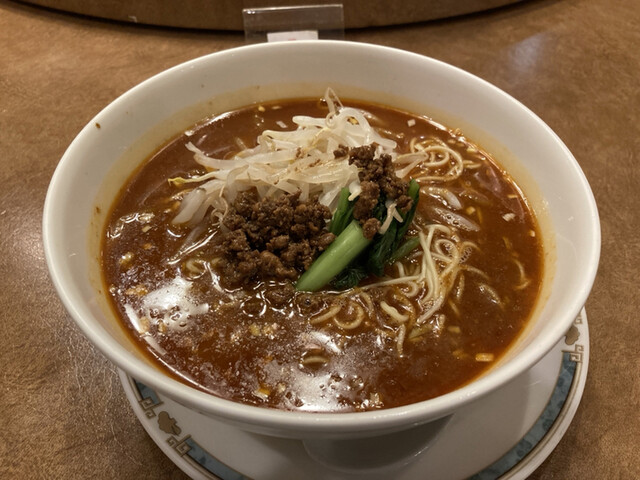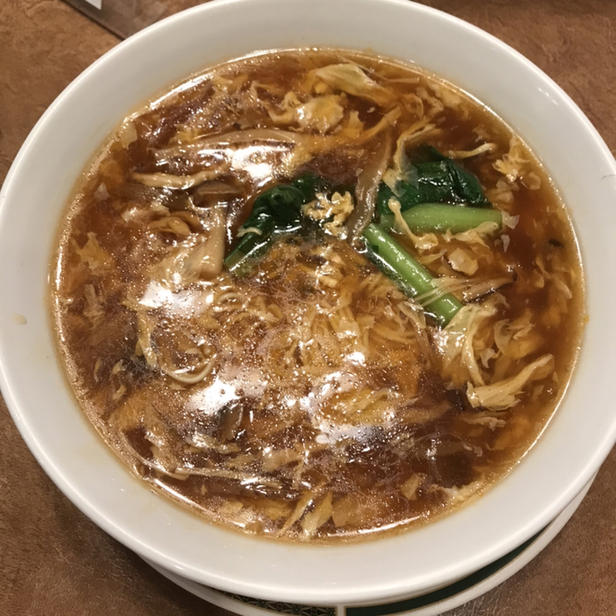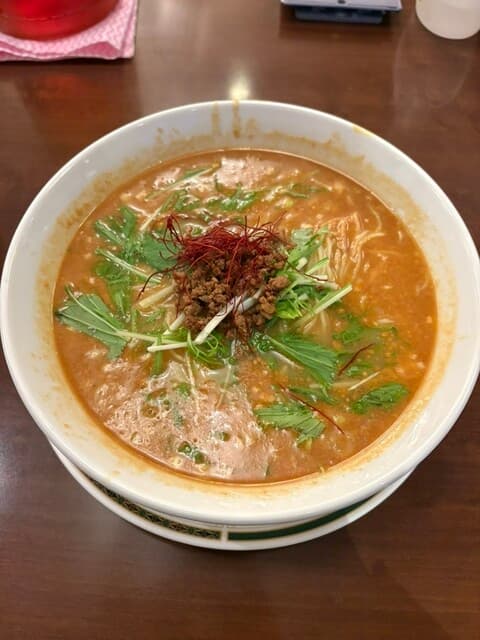
The popular "Kuoyang Shu" restaurant specializes in tangy noodles. This time, instead of the regular "Original Flavor" or "New Flavor" options, I chose the limited-time menu item "Tangy Noodle Miso Flavor," which piqued my curiosity.
To conclude, although the average score of Lake Yang Shu’s tangy noodles is satisfactory, it is still a dish that makes one recognize the high level of completion that regular tangy noodles possess.
The soup of "Tangrian Miso Flavor" definitely has a blend of miso and tangrian noodles' aromas. However, upon tasting it, I couldn't feel the punch or distinct personality that I had expected.
The flavor of the soy sauce at the base is combined with the unique flavors of sesame sauce and lardo oil characteristic of tangy noodles. However, neither element stands out strongly enough, nor does it become too weak. Instead, it seems that the focus of the dish becomes somewhat blurred. If the richness and aged flavor of the soy sauce had been more pronounced, a truly harmonious blend of flavors would have been achieved. But this time, it feels like the balance is somewhat lacking.
It’s not that it’s not delicious at all. However, since I’m familiar with the regular tangy noodles “Genmi” and its contrast between sesame sweetness and spiciness, along with its umami flavor, this “miso flavor” still feels somewhat lacking.
The noodles are thin, elastic noodles that firmly hold the rich soup. This is a characteristic of Hōyōki-san’s dishes, emphasizing stability and quality. The toppings, such as meat miso and vegetables, also reflect his usual meticulous craftsmanship.
However, these ingredients are not enough to overshadow the impression of the soup. Overall, it feels like a dish that is simply well-prepared and cohesive in its entirety.
The limited-time menu is a great feature as it showcases the restaurant’s creativity and challenge. However, this time's "Danjang Miso Flavor" didn’t possess enough appeal to surpass its regular menu items.
Of course, it's wonderful that these restaurants are willing to experiment with new flavors. However, I believe the true excellence of Hukou Shu lies in the "Danzili Mee" and the "new flavors."
Next time, I would like to enjoy that enduring classic once again, and savor its high level of completion. It was a drink that made me feel that way. Thank you very much.
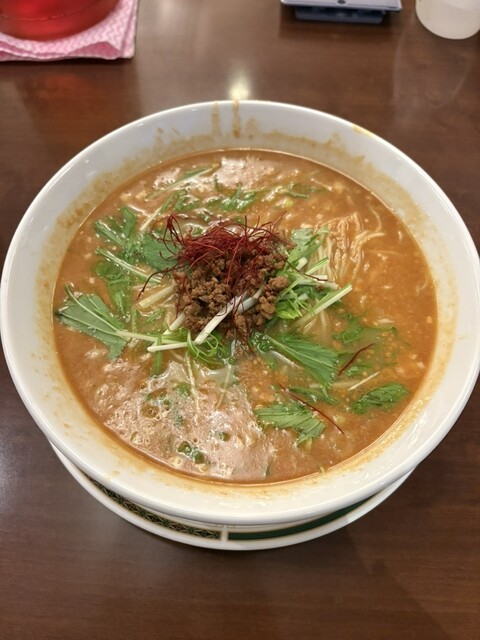
Speaking of "Kuoyang Shu" in Honmachi, Osaka, one thing is certain: it's known for its "Danjia Mee". But this time, I wanted something different, so I ordered the "Chong Cha Shou Mee".
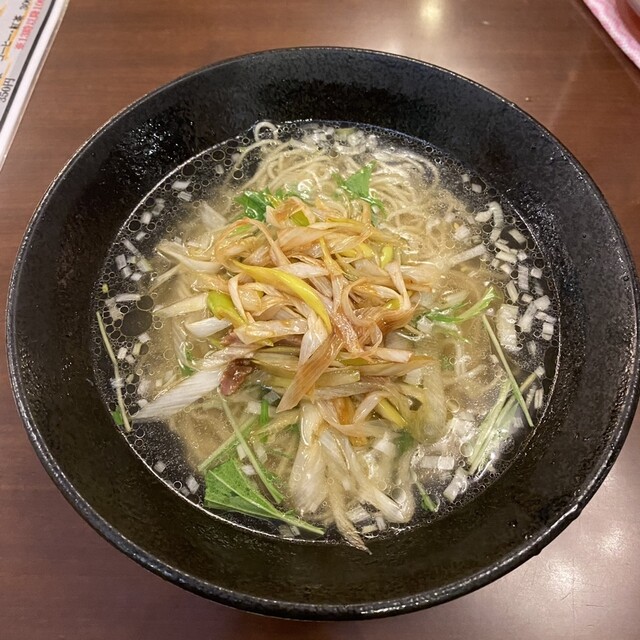
This "Chive Charusui Mee" is topped with plenty of finely stir-fried and softened green onions. It’s a dish that’s not commonly found elsewhere, making it quite unique.
After enjoying the "Danzhi Mee" as a famous dish, I often choose to eat the "Sour Hot Soup Noodles". However, this "Green Chive Charusui Noodle" is also quite delicious. So, when you don’t want to eat either Danzhi Mee or Sour Hot Soup Noodles, please give it a try.
Recently, after visiting a super-famous restaurant serving takoyaki in Kobe, I became fascinated by takoyaki and decided to visit this place.
I ordered "Tansan Mee Genmei", a dish I had eaten several times before. The price is 850 yen.
My impressions after eating it are as follows: (I recently ate a rich noodle dish at a highly famous restaurant in Kobe, which used a lot of spices. However,) the taste lacked depth, and I felt quite dissatisfied. Perhaps this is the way a "tantanmen" noodle dish should be prepared to suit Japanese tastes. Nevertheless, it was unfortunately not satisfying at all.
In my mind, the option of going to this restaurant when I want to eat坦々麺 has disappeared. However, there are also dishes like 酢辣湯麺 and 麻婆豆腐. I would like to visit again if I have the chance.