The kaiseki restaurant "Sonoki" in Shibuya City, if you mention it...
The first-generation owner worked as the head chef for the renowned Kaizawa restaurant "Tsuru Kō".
And about 20 years ago, I became independent and opened "Miyakari Suzukoki," with a limited service of two groups per day and night.
The second-generation restaurant also operates in White City (Matsunari).
At the "Hata Nakaya" restaurant located on the east side of Kanazawa Station, they offer breakfast through a shared-location operation.
They were very active.
By the way, it's a Michelin one-star restaurant.
This restaurant has relocated to Higashi Cha-ya Street on July 12, 2025.
We have opened "Cha No Yuu Suzukoki".
A very nice restaurant that has been renovated from a townhouse built 120 years ago.
So, immediately, I booked a Japanese-style set meal for morning tea (7,700 yen).
We have gone and visited.
By the way, the price is quite reasonable.
It also allows you to experience the etiquette of serving kaiseki in a tea ceremony.
This is a so-called experience-style kaiseki meal.
You can have a truly unique experience here.
By the way, tea kaiseki refers to...
In formal tea gatherings within the art of tea ceremony,
It refers to a meal served before enjoying the dark tea.
There are about 5 counters.
The walls are blue, and there's a magnificent counter made of solid wood.
The hanging scrolls and flowers are also very beautiful.
I first tasted the tea and hand sanitizer from Kuromiji.
Next, the dishes will be served.
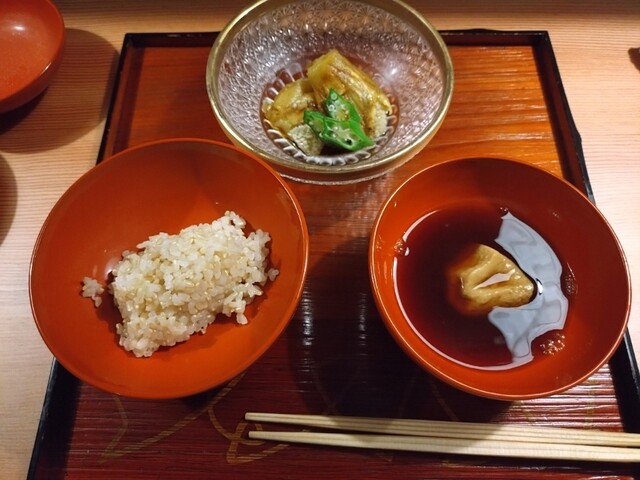
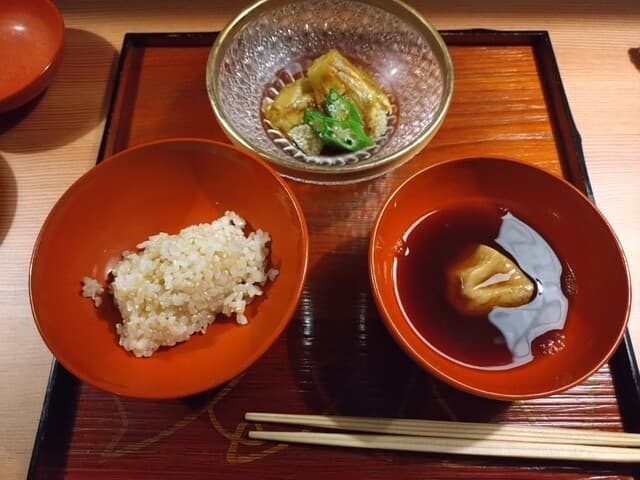
Brown rice
This segment contains a restaurant review in Japanese. Here is the translated version in English:
Yabun Miso Miso Soup with Live Noodles and Red Broth – Delicious! The live noodles are extremely delicious.
This dish, known as "Ebi no Yaki Bishitsu" or "Okura Yabishitsu," is characterized by its fragrant aroma. It truly offers a delightful experience with its enticing scent.
Oklaroもシャキシャキ
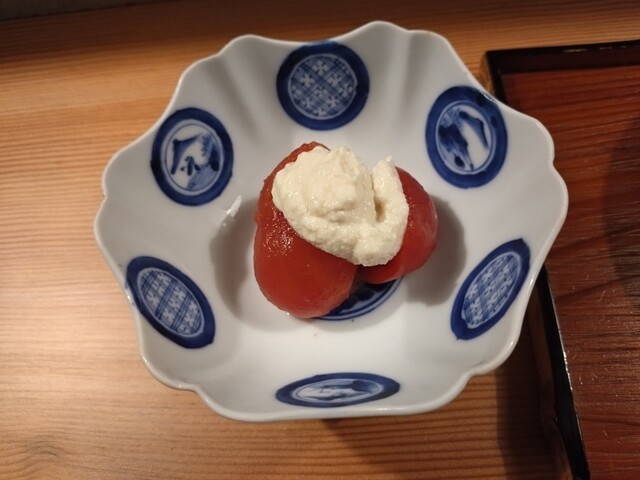
A dish made of tomato okihitachi, mixed with tofu and rice wine residues. Delicious.
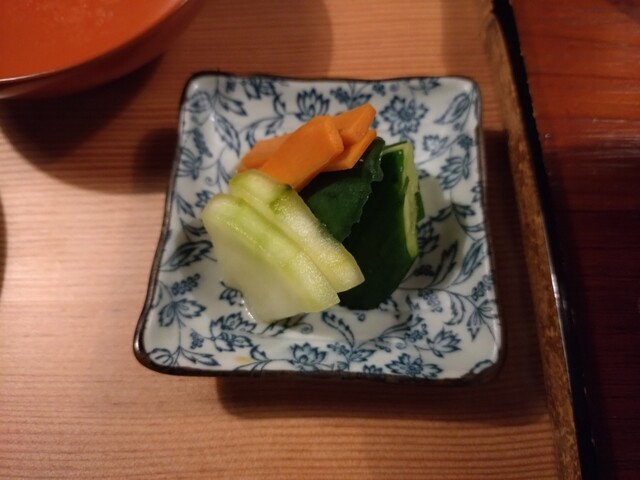
Pickled vegetables
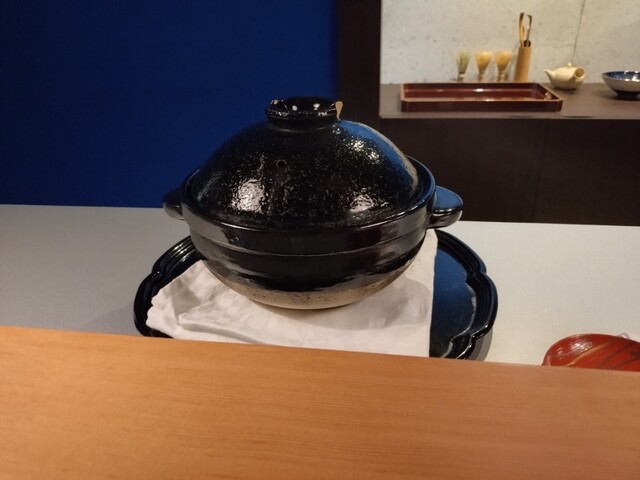
Next, a earthen pot is served.
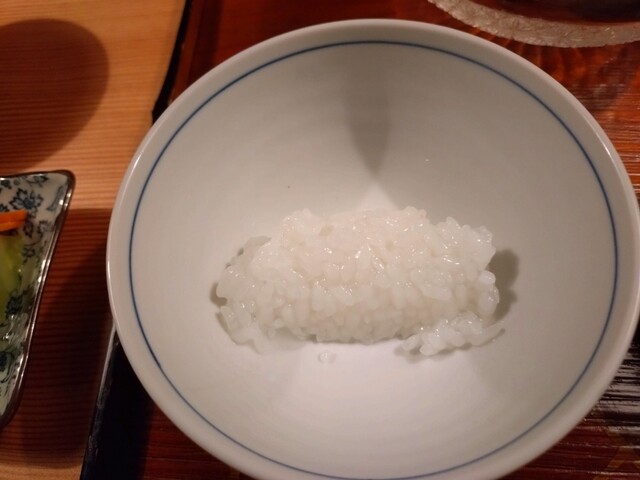
First, we serve "Niebana," which is white rice that has just been cooked.
This is the moment when the rice replaces the plain rice in the dish.
It’s delicious with al dente.
Continue
Chirimen Jyako
Miso Soup Kanagawa Miso. The miso is from Yamato Soy Sauce. The ingredients include Okawacame, red chestnuts, and shiitake mushrooms.
The texture of the shiitake mushrooms is also excellent, and the inclusion of fresh chestnuts and sweet potatoes adds a rich umami flavor to the dish.
Delicious!
Rice. If cooked differently, it has a different taste and is delicious.
Steaks and Sashimi: Last day was the Unyoku date, so we ordered eel prepared in Kanto-style. It was delicious!
It goes well with white rice.
Egg rice – served with eggs, soy sauce, bonito fillets, and seaweed. Delicious!
Up to this point, one paragraph.
Next, we move on to the tea ceremony in the tea banquet service.
There are clanging sounds, and then one enters the next room.
Move into a room of about 4 tatami mats.
This segment is translated as follows:
"Miso-yaki and matcha are served."
Here, I was taught the etiquette of serving tea.
First, a bow to the husband.
And with his right hand, he took the bowl.
He placed the tea bowl on the palm of his left hand.
Next, he raised his right hand, with his thumb positioned around the 12 o'clock position.
Until 3 o’clock, it will make a 90-degree turn to the right.
Next, place the right hand on the right side of the tea bowl, with the thumb positioned at the 6 o'clock position.
I put my mouth to that part and took a sip.
Then, she placed the tea bowl down and gave her husband a bow.
(Unintentional memory)
The rest is up to you to decide.
This is a mochi-yakagé made using special flour, a type of yakagé.
The fragrant aroma of wheat and the rich taste of dark sugar
It's extremely delicious.
It really goes well with matcha.
At this restaurant, Suzukoshi-san,
Of course, there are also daytime and night-time kaiseki dishes.
It seems that a class on the art of tea ceremony is also offered.
The building has a second floor, providing space for about 10 people to sit in.
The term "caeshi" refers to
In a tea room, it refers to the dishes that the host prepares to entertain the guests.
It originates from a story of Zen monks who carried heated stones in their belts to endure hunger.
It's truly remarkable that one can experience a true kaiseki-style meal in such a way.
Isn't this characteristic of Higanami's Higashi Chaya Street?
This restaurant is highly recommended not only by locals but also by tourists. (*´∀`*)