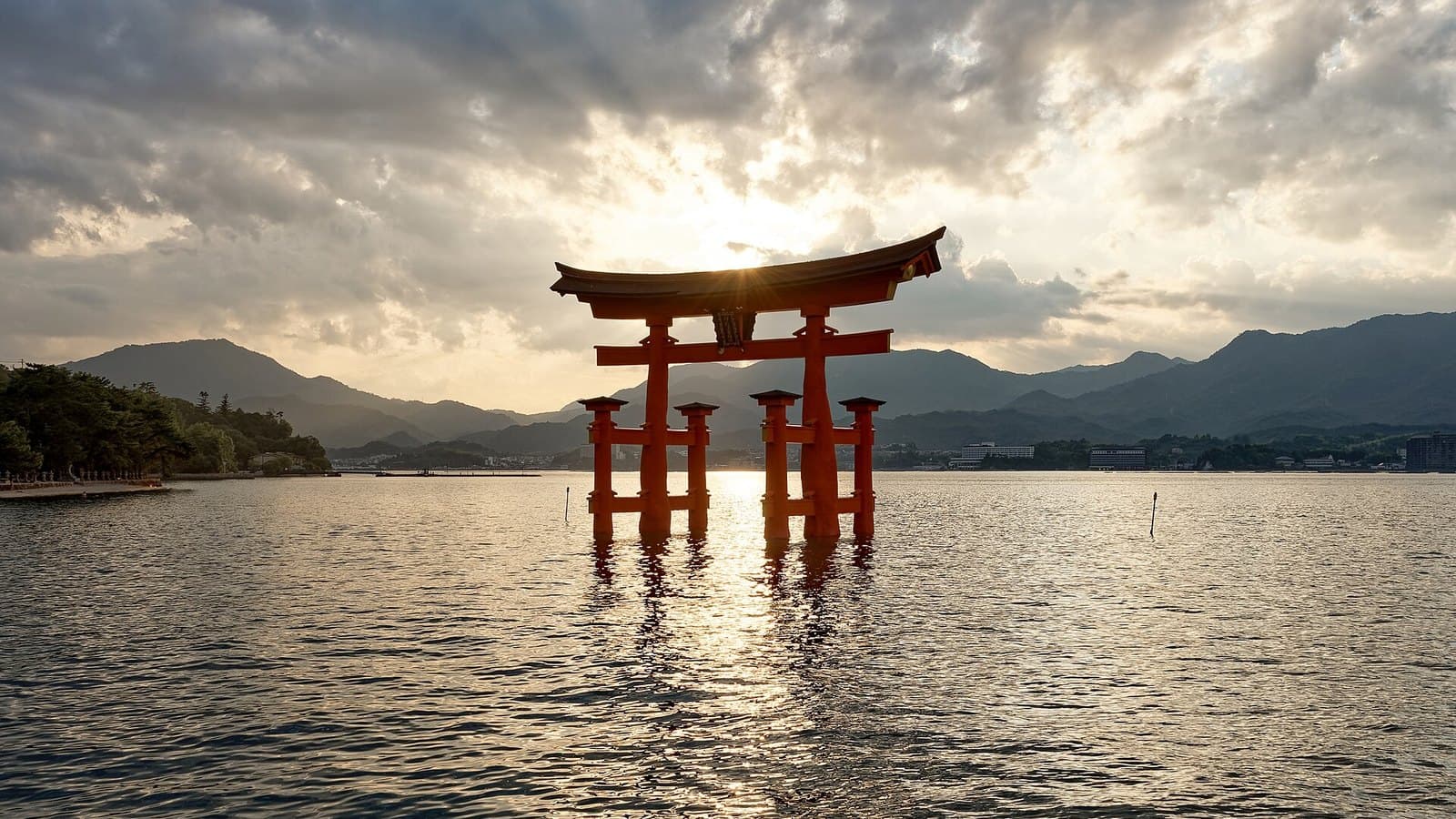
Miyajima is often remembered through a single image: the great torii gate of Itsukushima Shrine standing in the water. That view is powerful, but it is only the beginning of the island. A better visit follows the tide, listens to the sound of wooden corridors underfoot, and leaves enough time for lanes, hillsides, food stalls, and quiet views back toward Hiroshima Bay.
The best way to experience Miyajima Beyond the Gate is to choose a pace before choosing a route. Leave room for weather, small shops, seasonal details, and the moment when a familiar landmark looks different from another angle.
Begin with the tide
The tide changes the island's mood. At high tide, the shrine seems to float and the torii becomes part of the sea. At low tide, visitors can walk across the exposed sand and see the gate from a completely different angle. Checking the tide table before arrival gives the day a natural structure and helps decide when to photograph, when to enter the shrine, and when to wander.
A good plan is to arrive with at least one tide transition in mind. If high tide is early, enter the shrine first, then explore the town and return later to the shore. If low tide comes first, walk near the gate, then save the shrine's raised corridors for the moment when the water returns.
Inside and around Itsukushima Shrine
Itsukushima Shrine is not just a viewpoint; it is a spatial experience. The vermilion corridors, open water, mountainside backdrop, and framed views of the gate create a sense of movement between land and sea. Walk slowly, especially through the long corridors, and look sideways as much as forward.
The shrine area becomes busiest when day trippers arrive in the middle of the day. Early morning and late afternoon feel more spacious. Even if the main paths are full, a quieter rhythm returns once you step away from the direct line between the ferry pier and the gate.
Let the town slow you down
Miyajima's lanes are part of the visit. Momiji manju shops, oyster stands, small cafes, souvenir stores, and old wooden facades keep the island from feeling like a single monument. The most enjoyable route is rarely the straightest one. Turn down side streets, pause near the water, and leave time for a snack that is not eaten while walking in a hurry.
Food here is simple and memorable. Oysters are the best-known local flavor, while maple-leaf-shaped sweets make an easy break between shrine time and a walk toward the hills. A slow lunch can be more valuable than trying to fit every named sight into the day.
Beyond the first photo
After the shrine, continue toward Daisho-in Temple or the lower slopes of Mount Misen if time and energy allow. The atmosphere shifts quickly from busy waterfront to wooded paths and temple courtyards. Even a short climb gives a different view of the island and helps balance the day.
Travelers with a full day can combine the shrine, town, and a partial mountain walk. Those with less time should still resist the urge to rush away immediately after photographing the gate. Miyajima rewards second looks: the same shoreline changes with light, tide, and distance.
Planning notes
- Check tide times before choosing your ferry and shrine visit window.
- Arrive early or stay late if you want a calmer shrine experience.
- Keep visible food away from deer and avoid feeding them.
- Plan at least half a day, and a full day if you want both the shrine and the hillside paths.
Build the day around one clear thread
For a fuller visit, use Itsukushima Shrine as the main thread and let the tide table guide the pace. This keeps the itinerary from becoming a scattered list of stops and gives the article a clear sense of movement.
Add the great torii gate only when there is enough time to slow down. The best version of Miyajima is not the fastest one; it is the one where scenery, local routine, and small pauses have room to register.
Where the experience becomes specific
Details such as Daisho-in Temple make the destination feel rooted in its region. They are not side notes. They are often the reason a traveler remembers the day after the famous view has faded.
Practical planning also changes the experience. Think about oysters and momiji manju before the trip, and keep Mount Misen paths in mind if you want the route to stay flexible. A little preparation leaves more attention for the place itself.
Let the day adjust naturally
Plans work best when they stay flexible. If the busiest place feels crowded, turn toward quieter streets, smaller stops, or a longer meal; if weather shifts, move sheltered choices earlier in the day.
By the end of the day, Miyajima Beyond the Gate should feel less like a checklist and more like a place with its own rhythm: where to pause, what to notice, and what to let linger after you leave.
Extra planning checklist
- Put Itsukushima Shrine and the great torii gate on the map before choosing meal times.
- Check opening hours, transport frequency, and seasonal conditions related to oysters and momiji manju.
- Leave a flexible hour for Daisho-in Temple or another local detail you discover on the day.
- Avoid treating the guide as a race; the strongest memories usually come from one unhurried stretch.