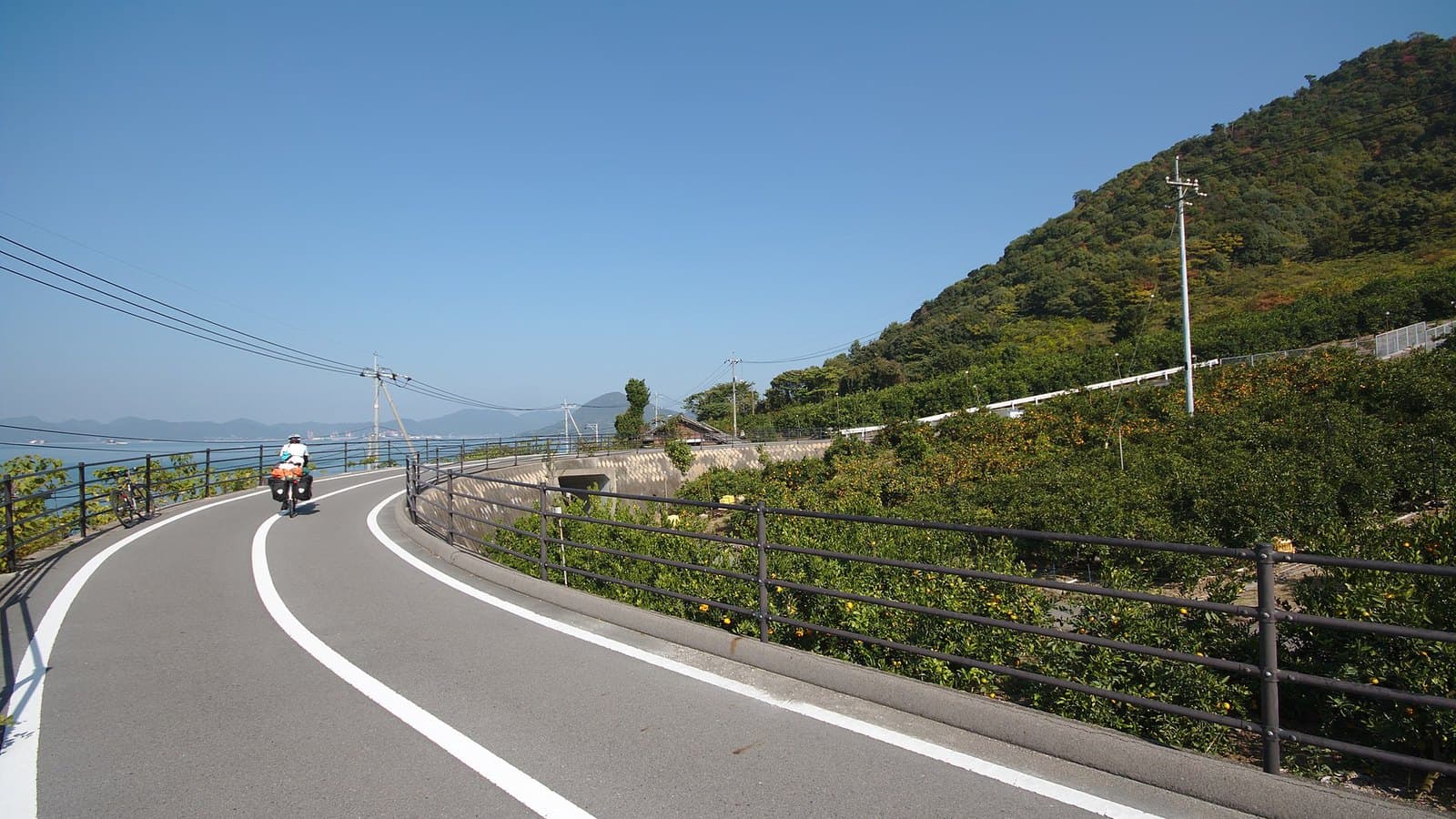
The Shimanami Kaido is one of Japan's most satisfying slow-travel routes: a chain of bridges and island roads linking Onomichi in Hiroshima with Imabari in Ehime across the Seto Inland Sea. The distance can be ridden in a determined day, but the route is better understood as a sequence of small coastal pauses, ferry views, citrus groves, fishing villages, and long blue spans of water.
The best way to experience Shimanami Kaido is to choose a pace before choosing a route. Leave room for weather, small shops, seasonal details, and the moment when a familiar landmark looks different from another angle.
Why the ride feels different
Many cycling routes are about athletic achievement. The Shimanami Kaido is more generous than that. The dedicated blue line on the road keeps navigation simple, rental systems make one-way riding possible, and the islands break the journey into natural chapters. You climb toward a bridge, roll above the sea, descend into another village, and then find a new reason to stop.
The best moments are often small: a view of fishing boats from a harbor wall, the smell of citrus near a farm stand, a shrine tucked beside a quiet lane, or the sudden scale of a suspension bridge after ten minutes of climbing. Even riders who are not serious cyclists can enjoy a shorter section if they choose their start and finish carefully.
A realistic first plan
Strong riders can cover the full route in one day, but a two-day plan is usually more enjoyable. Start in Onomichi, collect a rental bike early, and ride toward Setoda or Omishima for the first night. That leaves time to explore Kosanji Temple, coastal cafes, and local lemon sweets without watching the clock all afternoon.
On the second day, continue toward Imabari, saving energy for the bridge approaches. The climbs are manageable, yet they add up. If the weather is hot or windy, it is better to shorten the day than to turn the ride into a test of endurance. Ferries and bus options can help adjust the route.
What to notice along the way
The Seto Inland Sea is not dramatic in the way a mountain range is dramatic. Its beauty is layered and calm: low islands, working ports, small beaches, and a changing horizon. Sunrise and late afternoon soften the water, while midday gives the bridges a clean architectural presence.
Food also matters here. Citrus appears in drinks, desserts, dressings, and souvenirs. Seafood is direct and unfussy. Instead of planning one grand meal, leave room for casual stops; the route rewards riders who treat snacks and views as part of the itinerary.
Who will enjoy it most
The route suits couples, friends, solo travelers, and families with older children who are comfortable on bikes. It is less ideal for anyone who dislikes road riding, heat, or steady climbs. Electric bikes can make the experience more accessible, but they should be reserved early during busy seasons.
The most successful trip is not necessarily the longest ride. A traveler who spends a full day on just two islands may leave with a stronger memory than someone who crosses every bridge without stopping. The Shimanami Kaido is a route, but it is also a way of slowing the map down.
Practical notes
- Reserve rental bikes ahead in spring, autumn, weekends, and holidays.
- Carry water, sun protection, and a light layer for wind on the bridges.
- Check ferry and return transport options before choosing a one-way ride.
- Give yourself permission to shorten the route if weather or fatigue changes the day.
Build the day around one clear thread
For a fuller visit, use Onomichi and Imabari as the main thread and let the blue cycling line guide the pace. This keeps the itinerary from becoming a scattered list of stops and gives the article a clear sense of movement.
Add Setoda and Omishima only when there is enough time to slow down. The best version of Shimanami Kaido is not the fastest one; it is the one where scenery, local routine, and small pauses have room to register.
Where the experience becomes specific
Details such as citrus groves make the destination feel rooted in its region. They are not side notes. They are often the reason a traveler remembers the day after the famous view has faded.
Practical planning also changes the experience. Think about bridge approaches before the trip, and keep ferries and one-way rental options in mind if you want the route to stay flexible. A little preparation leaves more attention for the place itself.
Let the day adjust naturally
Plans work best when they stay flexible. If the busiest place feels crowded, turn toward quieter streets, smaller stops, or a longer meal; if weather shifts, move sheltered choices earlier in the day.
By the end of the day, Shimanami Kaido should feel less like a checklist and more like a place with its own rhythm: where to pause, what to notice, and what to let linger after you leave.
Extra planning checklist
- Put Onomichi and Imabari and Setoda and Omishima on the map before choosing meal times.
- Check opening hours, transport frequency, and seasonal conditions related to bridge approaches.
- Leave a flexible hour for citrus groves or another local detail you discover on the day.
- Avoid treating the guide as a race; the strongest memories usually come from one unhurried stretch.