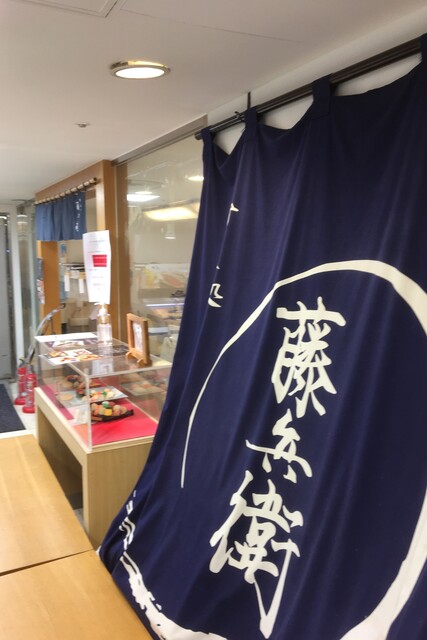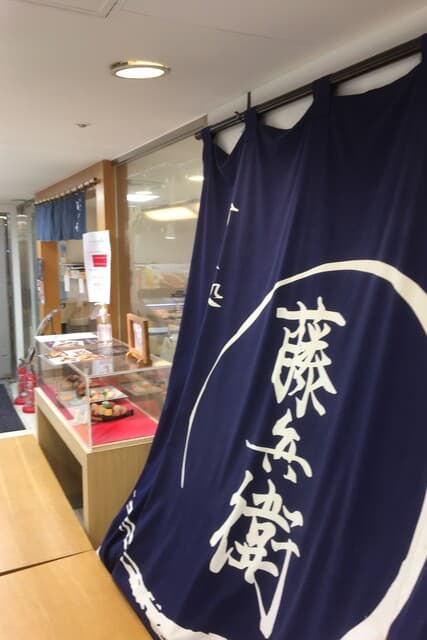
A sushi restaurant located in the food section of the B1 floor at Iijō-ya.
After a long time, I went to Komagata for lunch. Just to have sushi sometime, I searched for a restaurant. And there it was—a place I didn’t even know existed inside the Inozumi building. (As someone from another prefecture, I really don’t know all the restaurants in Komagata.)
Regarding sushi in Inabuya, there's a place called "Katoro Shibamachi". I visited that place before, and it was a decent experience. But from a quick glance, this store seems to have better reputations—people who speak highly of it say that the chef is skilled and the prices are affordable. I didn't know that before.
From the outside, there were a bunch of signs with sushi types listed on them. I thought it would be good to order whatever I liked. As a precaution against COVID-19, the counter was spacious, but there were only four seats available. It seems like there will be quite a lot of people waiting during lunchtime. I managed to get a seat just in time by being a little late.
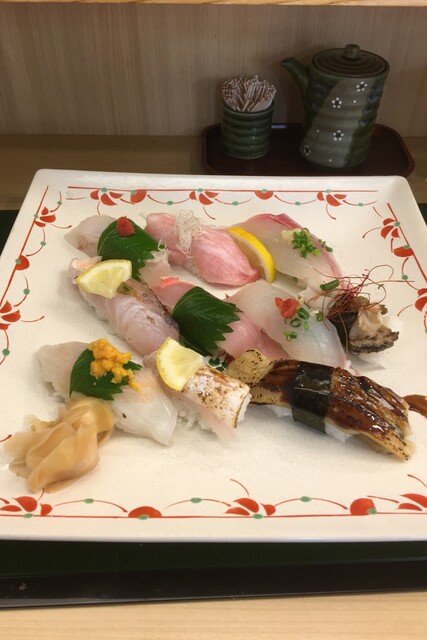
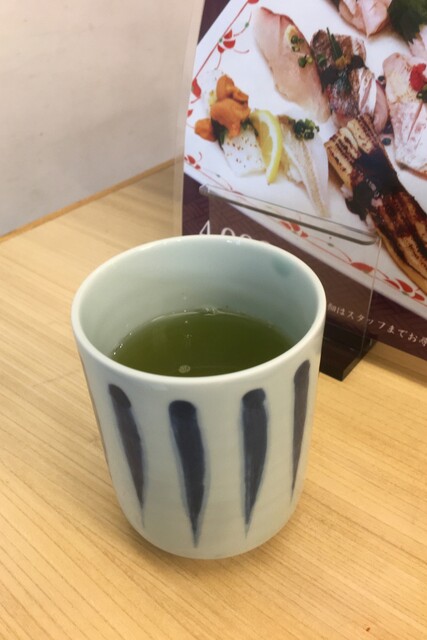
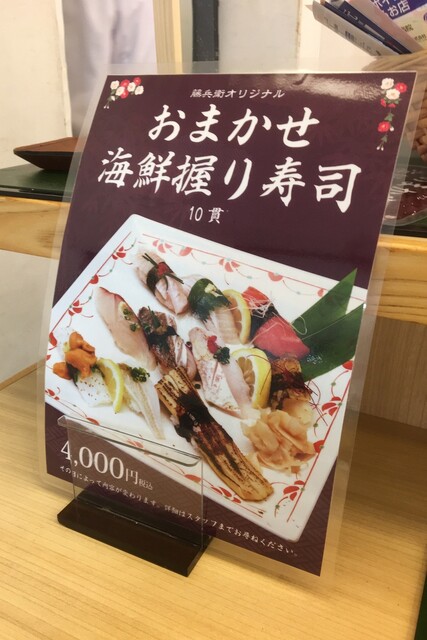
Well, after sitting down at the table, I was given a menu that stated, “The lunch menu is as follows.” It featured a set meal priced at 4,000 yen. Ugh… wasn’t this a reasonable place to dine? For a moment, I thought about leaving, but I decided against it, as it wouldn’t look good. So, I ordered what was on the menu. Could it be that due to the COVID-19 pandemic, fewer seats are available, resulting in higher customer prices? Or maybe it’s because it was after 1 PM, and they only accept orders for set meals at this time.
And the person who served it wasn’t even a “skilled chef” at all—just a young guy. Well, that’s not really a problem. But the platter they served was quite uncomfortable to eat. Most of the ingredients were accompanied by seasonings like yuzu pepper and chili peppers. I almost said, “Isn’t this ruining everything?”
There were also green onions and wasabi seeds in the dish. I really wish I could have eaten them with the ponzu sauce. It’s quite unusual to serve wasabi with sushi soy sauce. The fish felt crispy and fresh, as if it had been well-marinated. If served as sashimi, it would be fine with the sweetened chemical-flavored koshin soy sauce used for cooking. But what about using it as sushi? I know that people from Kyushu prefer it this way, but perhaps it would be better to let the fish rest a bit before serving it as sushi.
In this restaurant, for some reason, there are white radishes. I really don’t think they go well together. Even when we add ginger to the soy sauce, the white radishes act like tiny capillaries, absorbing all the soy sauce. It’s too salty. The abalone also has a crunchy texture, and overall it’s not bad. But somehow, it doesn’t seem to match well with yuzukonpō or chili peppers. After all, abalones are usually eaten after being steamed with seasonings, or as a side dish with water clams. I think raw abalones don’t really pair well with sushi. This place definitely doesn’t work well with abalones.
If it’s a cheap restaurant that costs just over 1,000 yen, then even with such a chaotic (Osaka dialect) way of preparing the food, it’s still acceptable. But what about a sushi that costs 4,000 yen? How can someone make something that looks like a mess? The only thing that seemed decent was the salt and lemon. Having octopus with oysters added, and adding dashi to it—that’s just an extra step. For whitefish, there were green onions and ginger. I really wanted to ask if it was actually sardines or anchovies.
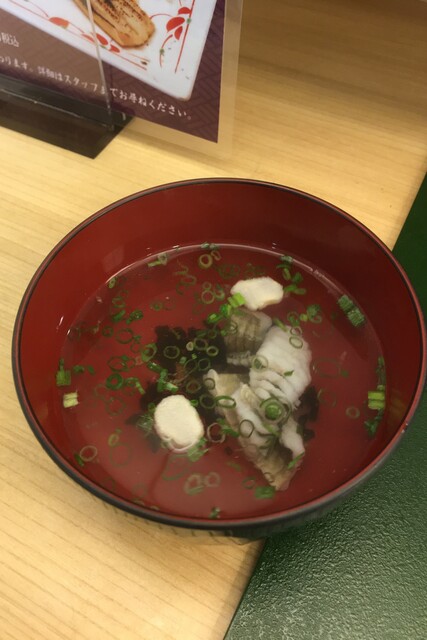
The pickled rice is also a bit dirty and sticky. I thought it would definitely fall below a ★3.0, but I managed to finish everything and drank the soup... However, this soup is absolutely disgustingly salty!! There are wakame pieces in it, but those are probably salted wakame. It seems like there wasn't enough salt added. The already bad taste became even worse than usual in recent years. What a shame to have to pay 4000 yen just to drink this salty soup. Seriously, just this aspect alone deserves a ★-0.7.
I think it's not necessary to praise one restaurant while criticizing another. But regarding our restaurant, it's different. In the future, if I ever want to eat sushi at Inokuyama, I will definitely go to the "Katoro Market" on the 8th floor. Well, the rating there is ★3.22, while ours is ★3.13. So, generally speaking, the reputation of "Katoro Market" might be better.
Well, many people who are negative about the restaurant often ask for complaints to be made right there. But even if they do so and the issues are resolved later on, I see no benefit for me. So why should I be so polite and give them advice? If I don’t know whether they will pay back the money or not, it’s better to write about it in the review later. That way, at least some of the complaints will be addressed.
Bad personality? I know it best myself, lol.