On Saturday, a little before 1 pm, we visited the restaurant with two people.
From JR Koenai Station, take the carriage road and you will find it about 8 minutes' walk away.
This is a restaurant that serves dishes from the southern Taiwan region, specifically from Tainan.
The term "魯肉飯" is a local term in the Tainan region. Therefore, it is listed as "バーソゥハン" on the menu.
It seems that there is also a branch in the nearby Chūkusu Ota-cho.
During my previous visit to this place, I didn’t get in because it was fully booked.
This time, the restaurant I had hoped to visit was closed temporarily due to a malfunction in the air conditioning system. Unwillingly, I decided to visit this place instead.
After a long time, I finally visited Machida-dou Ramen again. This is the 7th restaurant I visit here.
The restaurant has 3 tables for 6 people, 4 tables for 4 people, 2 tables for 3 people, and 1 table for 2 people.
Recently, it's quite rare to find smoking areas in restaurants with a smoke-free policy.
6명의 선객과 1명의 후객이 있습니다. 점심 시간의 마지막 단계에 있어서 음식이 조금 부족한 편입니다.
The menu offers set meals, set menus, as well as numerous individual dishes.
However, many of the menu items are difficult to imagine just by looking at their names, so photos are the only reliable way to get an idea of what they offer.
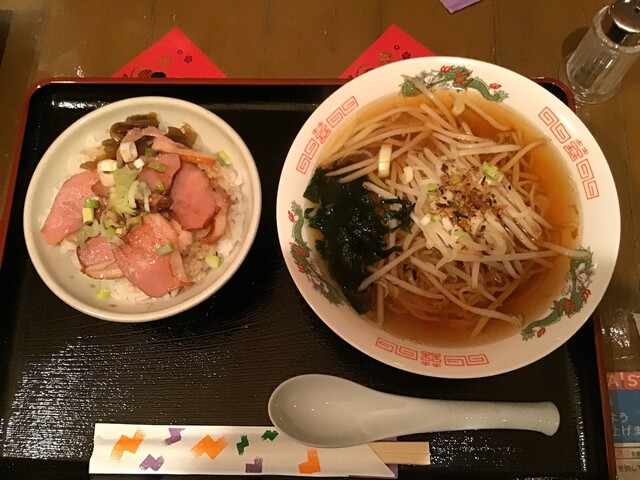
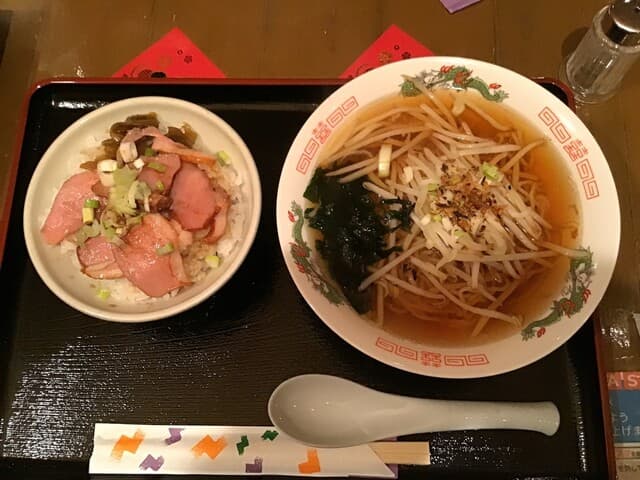
I ordered Yarochan Set (duck meat topped over rice + green onion and mizu-miso ramen) for ¥990, plus a large free bowl of rice.
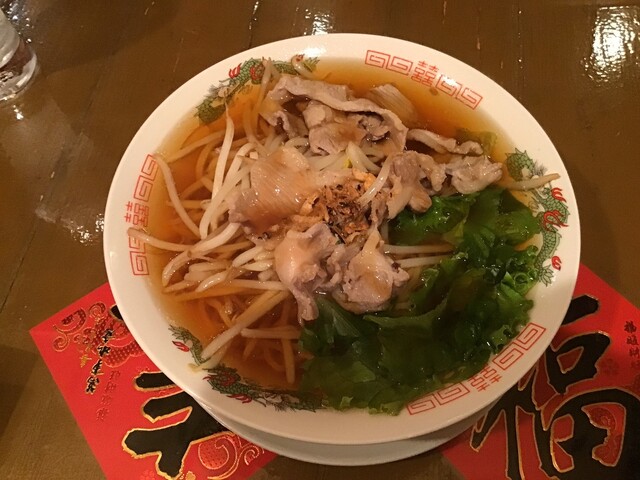
The companion ordered the pork soy sauce ramen for ¥688.
Yaro Hanseet does not have any photos on its menu, which is a bit of an adventure.
The companion chose dishes that could be roughly guessed from the menu name, but they also asked the staff about various aspects of the cuisine (^-^;
From the order placement, it takes about 9 minutes to serve the pork soy ramen, and about 13 minutes to serve the Yaron Han Set.
この葱もやし醤油ラーメンの具材は、わかめ、もやし、葱、揚げ葱という、かなりシンプルな構成です。
The soup has a light, animal-based soy sauce flavor.
This soup has a strong salt taste, which many people enjoy. However, it still feels quite salty, indicating that the salt content is quite high.
In Taiwan, where salt intake is essential in hot weather conditions, it might be that the dishes retain their authentic local flavors.
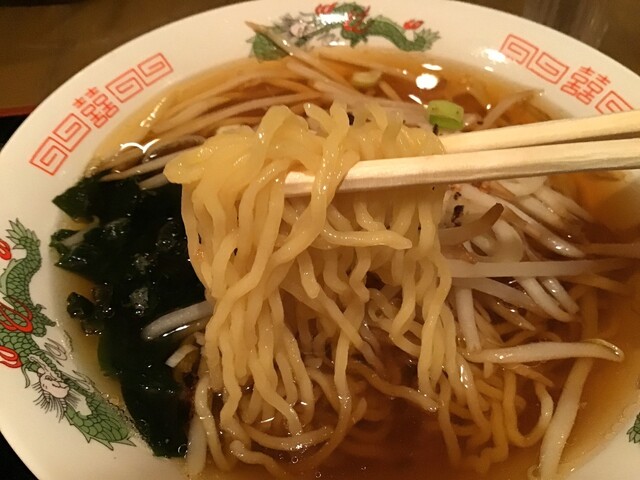
The noodles are medium-thick.
The somewhat spicy and intense texture is quite enjoyable.
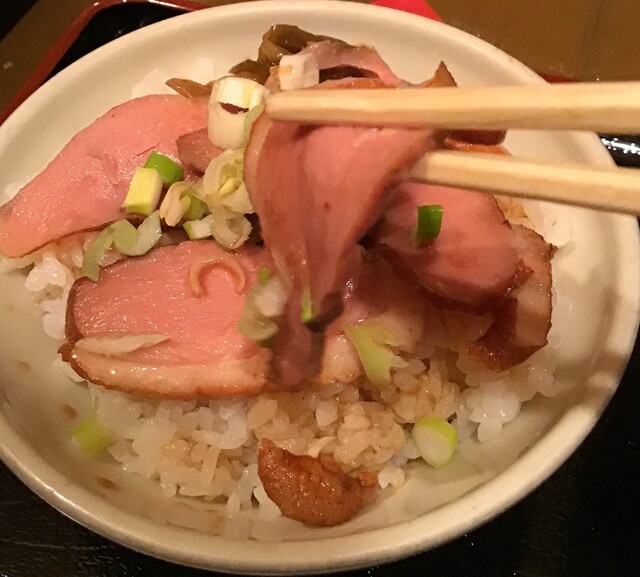
The duck meat rice is prepared by pouring sweet and sour sauce over the rice, followed by 6 pieces of duck meat, zaziki, and green onions.
The duck meat has a texture similar to that of tender roast beef, with no strong taste.
Za Sa is a type of dish that has a strong, pungent flavor.
The rice has a lot of moisture, so it feels a bit wet and messy.
The large rice portion is a feature of this restaurant. However, if you do not eat strategically, there is a possibility that only the rice will be left at the end. Please note this.
Since I have never been to Taiwan, it's just an assumption on my part. But it seems that these dishes are indeed trying to recreate the local flavors.
It seems that they have not been arranged in a way to be acceptable to Japanese people.
Additionally, the walls were adorned with numerous photos and color papers that appeared to be from banquets hosted by Taiwanese guests.
I felt that this flavor is truly loved by Taiwanese people living in Japan.