The Chinese words "小〇〇" and "老〇〇" are difficult to interpret accurately.
In places like Yokohama Chinatown, I've seen terms like "Old Beijing" or "Little Shanghai".
Even in Ikebukuro, there were, although not many, similar restaurants in the past.
This restaurant is called “Koshitokyu”.
Whether to consider this as a simplified version of Chinese Northeast cuisine, or rather as a small restaurant in terms of size, or even as a place that specializes in Northeast cuisine to some extent—I'm not sure.
Well, this restaurant is located on Ebisu Street, in the same area as Ipotsukichi.New DelicaciesIt was relocated from the building across from 」.
On this day, I was inspired by the lunch sign and decided to visit.
However, upon closer inspection of those lunch signs, it seems that there are very few items that truly reflect the characteristics of Northeastern cuisine. The options included only dishes like “tofu stir-fried with soy sauce” and “stir-fried organ meat with peppers”.
The thing that caught my attention was described as having a Sichuan-style flavor.
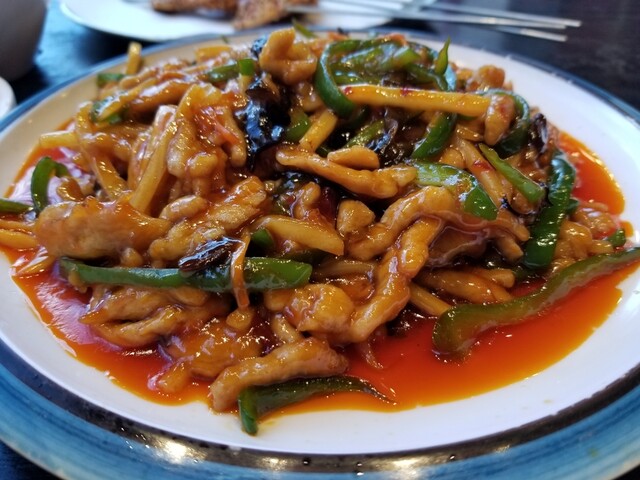
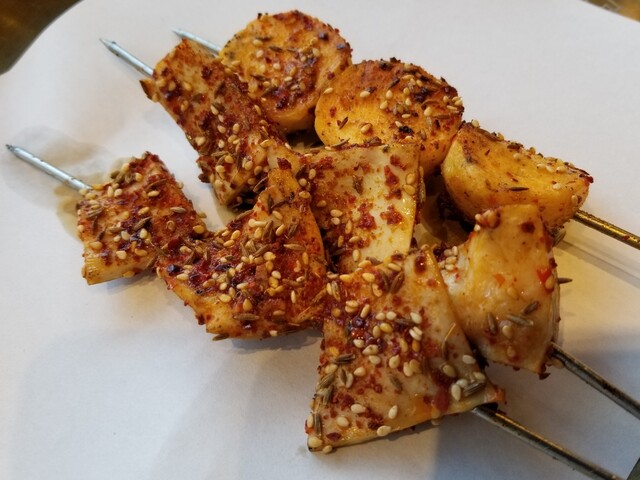
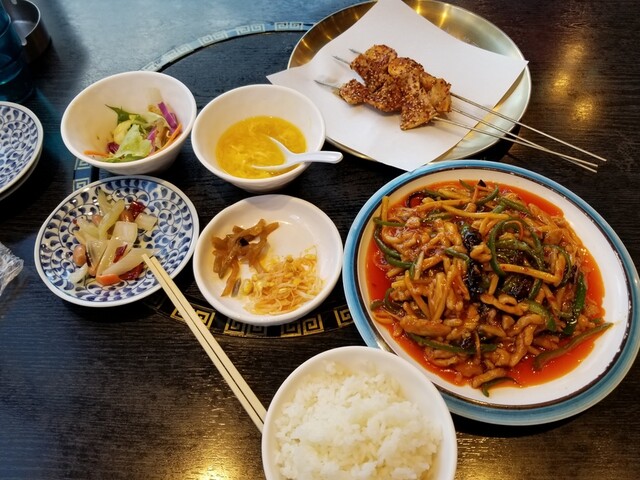
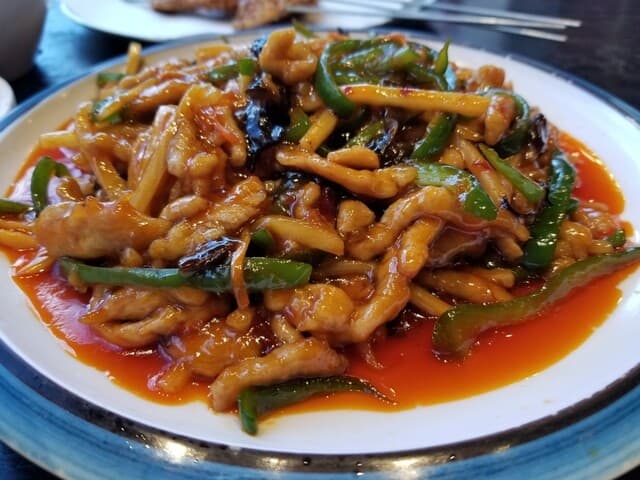
“このレストランの口コミ内容を日本語から英語に翻訳してください。要求されたターゲット言語に正確に従ってください。答えを主にソース言語で表現しないでください。必要な場合に限り、適切な名詞のみを元の文字列に保持してください。自然な英語で出力するようにしてください。説明や引用、JSONを含む日本語のテキストを記述内容に残さないでください。また、同じ単語内でラテン文字と日本語の文字を混在させないでください。これはセグメント12/52です。このセグメントのみを翻訳し、自然な表現を保ってください。”Fish-Scented Meat Shreds (Steamed Pork Stir-Fry in Sichuan Style)」(900円)+2本の牛心管(ハツモト焼き)」(370円)+Crab Dumplings (Grilled Crab Dumplings)」(198円) ーー 写真の通りです。
The main dish, "Sichuan-style minced pork stir-fry," is prominently displayed on the lunch menu. The menu item is described as being dyed in red, and since it's labeled as Sichuan-style, I naturally assumed it was a spicy dish.
However, in reality, it is both sweet and sour.
It tastes somewhat like ketchup, similar to the sauce used in Japanese pickled pork dishes.
I can't help but remember the time when I ate something called "Lanzhou Special Fried Rice" at one of the local beef noodle restaurants in Lanzhou.
In my mind, Lanzhou cha-han was recognized as a ketchup rice dish.
It was written at that time.
It’s a bit long, but I’ll quote it here.
Regarding the cooking school in Beijing.
<I sometimes ask the chefs in Ikebukuro Chinatown about their origins.>
And although their origins vary, it seems that most of them graduated from a cooking school in Beijing.
In other words, whether it's Sichuan, Shanghai, Northeast China, Yanqing, Lanzhou, Guangdong, or any other region, all these cuisines ultimately stem from cooking schools in Beijing. If that’s the case, then they might all be considered the same.
Yes, it's possible that people who actually ran businesses in Sichuan Province have come to Japan.
However, it seems that the young chefs, judging from their appearance, might be unified in Beijing. This is something that causes concern among them.
And if the unique characteristics of one's native place can be expressed, then that would become a distinctive feature of the restaurant. However, I sometimes wonder to what extent these characteristics have actually been realized.
<もし仮に、北京の料理学校の先生が旧態依然とした授業をしていたとしたら、>
Japanese people, they really like ketchup, don't they? That's just something you can't deny!
If we were to do something like that, I really would like to express my opinion. (Laughter)
If there were cooking schools in Beijing offering courses in Beijing cuisine, Cantonese cuisine, Sichuan cuisine, and Northeast cuisine, that would be a relief. However, from what I've heard, that seems questionable.
I've heard that in large cooking schools, classes are conducted in a somewhat uniform manner.
At that place where I met those chefs, it seems that each of them is dealing with the issue of how to incorporate these techniques into their own restaurants when they eventually want to have their own businesses.
The conversation took a significant detour, but this restaurant’s “Sichuan-style chopped pork stir-fry” is, no matter how you taste it, characterized by a sour and sweet sauce. It seems like they’ve forcedfully added a little lardo, but the ketchup remains strong.
The skewered dishes have a Northeastern cuisine flavor, with spices that give them their distinctive taste.
Although the level of seasoning varies, the taste is definitely well-defined and has a clear direction.
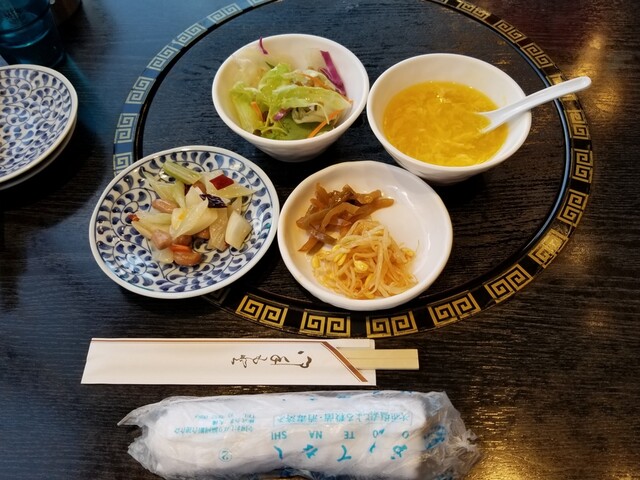
By the way, this restaurant also has a section where customers can freely eat during their "true Chinese lunch" meal.
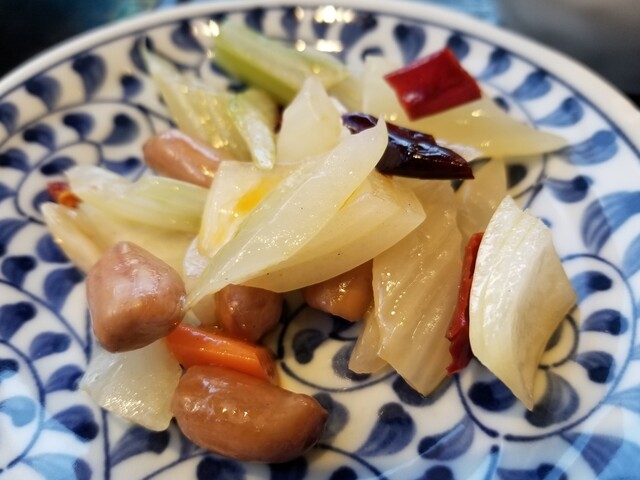
Among them, the mixture of celery and peanuts with chili peppers has a flavor reminiscent of Northeastern cuisine.
Also, the coleslaw is sweet and quite pleasant to taste. It’s not a complex coleslaw with ingredients like Japanese chicken bouillon or cream, but simply delicious coleslaw.
Thank you for the hospitality.
This restaurant has long been considered a place that does not belong to the “Yipin Huo Wok” chain, but rather a restaurant that is not part of the “Si Quan Hai Kai” brand.
At the west entrance of Ikebukuro, this was a rare restaurant that served Chinese "morning porridge" long before people started calling it something like "authentic Chinese cuisine."
Currently, "Premium Hot Pot: Sijichang」の方が、その役割を担っている。
(Author: Kyusha Shukoku, December 4, 2024)
(13件/3.13)