“Nijō-jō Furuta” is a restaurant located in a residential area on the way from Umuro-Goi to Nijō-jō. It’s about a 5-minute walk from Nijō-jō-mae Station. The building seems to be a renovated old townhouse. Its appearance gives a sense of being in Kyoto for a meal.
The interior design eliminates all unnecessary elements, with a configuration of one table for 5-6 customers at the counter. It seems to be operated by just a couple, so they likely take advantage of reservations to ensure a comfortable dining experience.
Chef Kouta Yukihiro is from Shiga Prefecture. He honed his skills at restaurants like "Shiyo Kazutoki", "Kōmurayama", and "Gion Okada". At the young age of 30, he opened his own restaurant. In the Michelin guide, it has been awarded a one-star rating, while in Yumello, he has received a bronze medal.
The prices are not listed on the drink menu, which is a bit concerning. This isn’t unique to our restaurant; most Japanese-style restaurants (Japanese cuisine, sushi, tempura, etc.) seem to avoid clearly listing the prices of alcoholic beverages. If the prices were clearly marked, customers would likely consume within their budget. In that case, sales would likely increase.
First, the white asparagus. The ingredients are clearly presented, making the taste easy to understand. It comes in a thick size, with a satisfying chew on the teeth. The sauce, mixed with seaweed, is also very good. It has a French-style flavor.
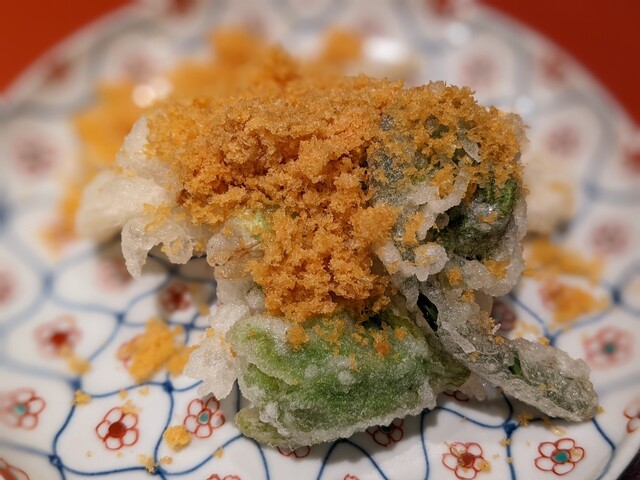
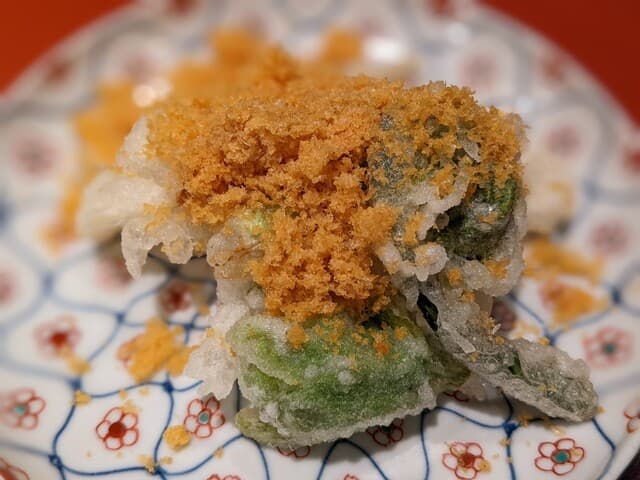
Next, we drizzle the homemade karashimi over the fried vegetables and white fish. The unique bitterness of the vegetables blends perfectly with the umami of the karashimi, making it a truly delicious dish that enhances the effect of sake.
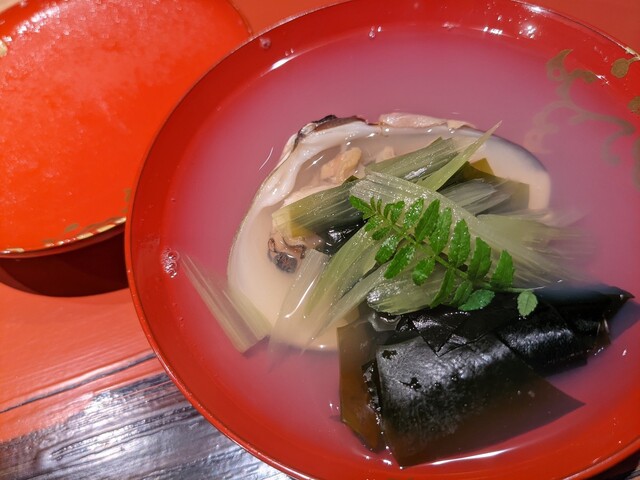
The bowls are made of hamaguri. They are produced in Sunama, just like Nana Nishino's. The unique metallic aroma is truly delightful. The soup is also very rich, with a strong saltiness that leaves a lasting impression on the taste buds.
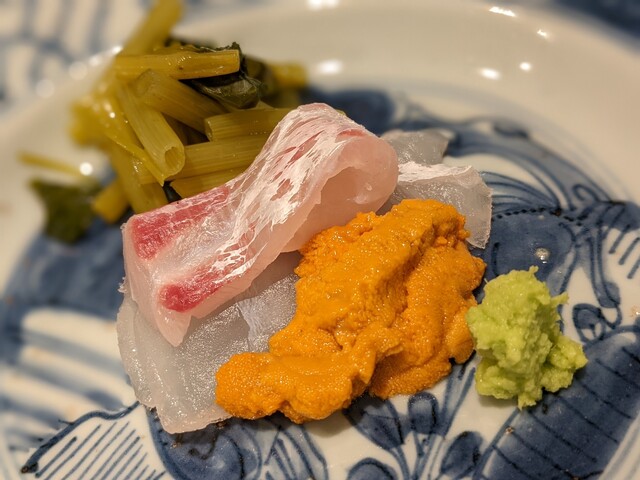
The sashimi is made from tuna from Akashi and oysters from Yamaguchi. This dish is really delicious. It's so chewy that it makes one wonder if it was served at a Gold Gym. Every time you bite into it, a delicate umami flavor seeps out.
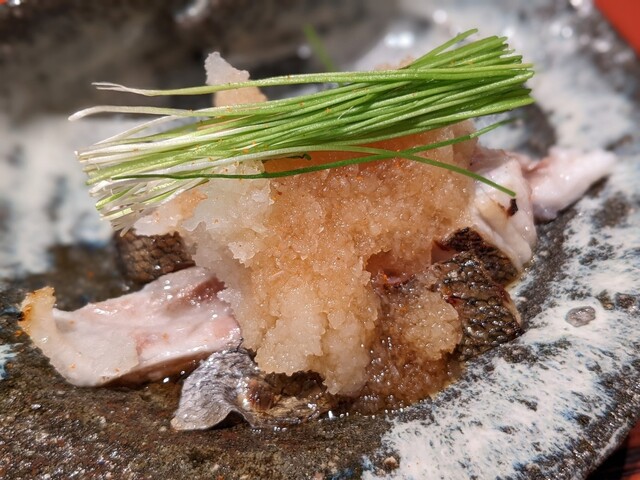
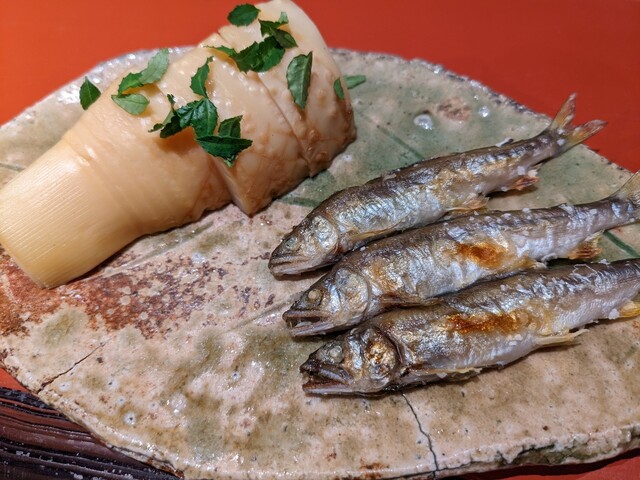
The Ishaki from the Five Islands is grilled until the skin becomes crispy and semi-moist. The well-cooked skin emits a delicious aroma, and its fat is extremely juicy. This creates a multi-layered flavor profile with varying textures in terms of texture and taste.
The smallmouth bass in Lake Biwa paired well with the bamboo shoots from Ohara-no. Ohara-no is a famous place for bamboo shoots, and indeed, they were incredibly delicious. The taste was clear and free of any off-flavor, yet it fully conveyed the flavor of the land. It was a truly remarkable dish.
This is a segment from November 19th. Only translate this segment and keep the wording natural.
**Japanese Text:**
和牛のヒレ肉に花山椒。和牛と言えども決してクドい脂は感じられず、清冽極まりない爽やかな香気を放つ花山椒と併せて食べるにピッタリです。付け合わせの菜の花も春爛漫といった味わいで見逃せない美味しさでした。
“Since you have enjoyed Japanese sake,” they kindly gave me karaasumi as a gift. It was of the size of a kamaboko, and I couldn’t help but drink more sake after that.
The fish dish is grayling. It's still a dish in the French style, but the sauce is made with white miso. The fragrant cherry shrimp serves as a nice accent. It's delicious, but there's a slight issue: it seems a bit too rich. The flavor of the fish gets somewhat overshadowed by the sauce. That's a bit regrettable.
The meal consists of hot pot with hotaru-ike and bamboo shoots. Not only are the ingredients delicious, but the rice itself is also well-marinated with a strong flavor. It can be eaten even without any additional toppings, or it can even be enjoyed with alcohol.
The dessert consists of extra-large strawberries, lemon ice cream (possibly gelato?), and mango. The strawberries are from the "Marimeh" variety from Wakanoshi, and they are about the size of an adult man's nose. It’s best to just eat them without any additional handling—directly on the palate, and they are truly delicious.
After eating the above dishes and having a light drink, the total cost for each person was 33,000 yen. I would have preferred a lower price, but considering that to fully highlight the quality of the ingredients, a certain amount and quality are necessary. So, this is probably the best we can do.
This is a contrast to the ridiculous self-proclaimed Japanese restaurants in the Minato district, which serve oysters topped with truffle and caviar as toppings. It represents a style of cuisine that is honest and robust in flavor. While it may not be flashy or showy, it’s a great choice for those who want to enjoy genuine Japanese cuisine without any gimmicks.
■写真付きのブログはこちら→https://www.takemachelin.com/2022/05/furuta.html