A restaurant located near Chidamagie Station. It's underground, so it might not be immediately noticeable. The interior has a folk-art style and a cozy, woody atmosphere. However, the flow of customers makes it difficult for staff to serve them properly. In short, it's hard for staff to pay attention to every customer individually. They also tend to keep a relatively small number of staff members. It's not a restaurant that can be praised for its service; it's hard for people to come here even if they try.
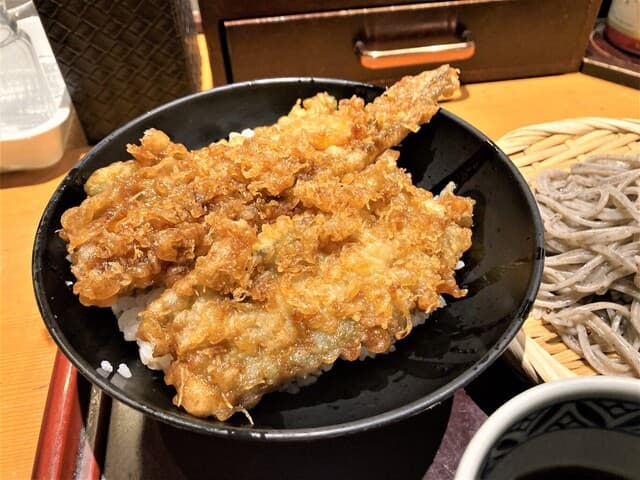
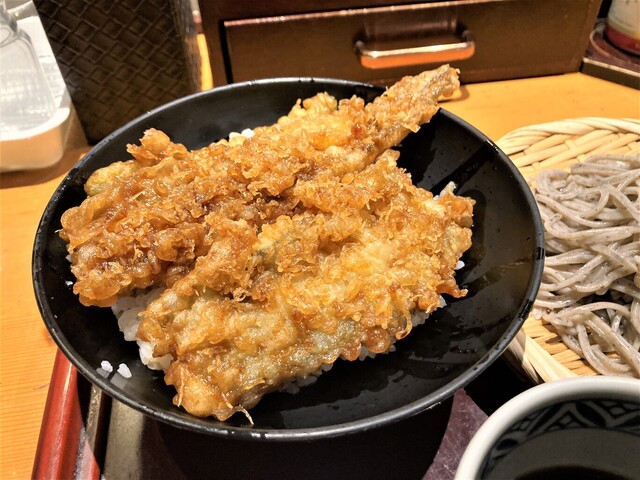
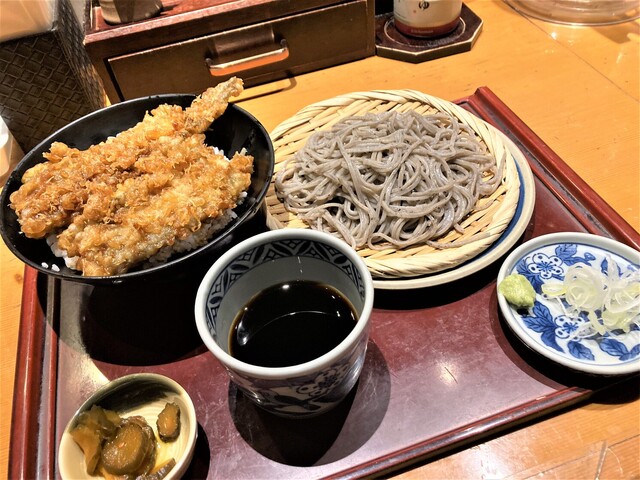
After a long time, I visited this restaurant during the day. It seems that the staff hardly notice when customers arrive. I sat down at a L-shaped counter. There are many attractive menus available. The variety of combinations with soba noodles is truly dazzling. I ordered a set consisting of Kombu Soba and Akama Ten-Don, which is a famous dish of this restaurant. The price was 1,200 yen. Although the amount of soba noodles was a bit small, the akama in the Akama Ten-Don was large enough to make it sufficient. The soy sauce poured over the akama isn’t very rich or thick. It’s not my favorite, but it’s quite acceptable. I wish that more soy sauce could be added to the rice as well.
However, it was quite delicious.
The payment process when leaving the restaurant is completely unmanned. You simply insert money into the machine. It's inevitable due to efforts to reduce labor, but it's strange that there are no people there at all. I wonder if customers who leave without paying will be left unattended. It's an unnecessary worry, but I still feel concerned.
In a soba-ya, there aren’t many places that serve sophisticated small dishes. It’s been quite some time since the term “soba-me” was first used, but surprisingly, the offerings at soba-yas everywhere are quite similar. Of course, traditional soba-yas have a long history, and the snacks served before eating soba are also part of that tradition. These snacks include seaweed, Asahi-style pickled vegetables, and other similar dishes. But these items still follow the same basic pattern, making them seem somewhat monotonous.
On the other hand, most restaurants do not focus on anything other than soba in their menu. After eating a variety of small dishes and drinking beer or sake, they often serve soba as the main course. It might be because they want to ensure that soba stands out and doesn’t become overshadowed by other dishes.
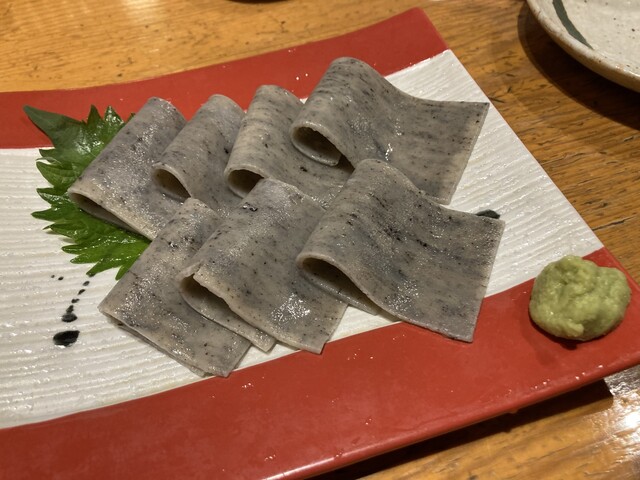
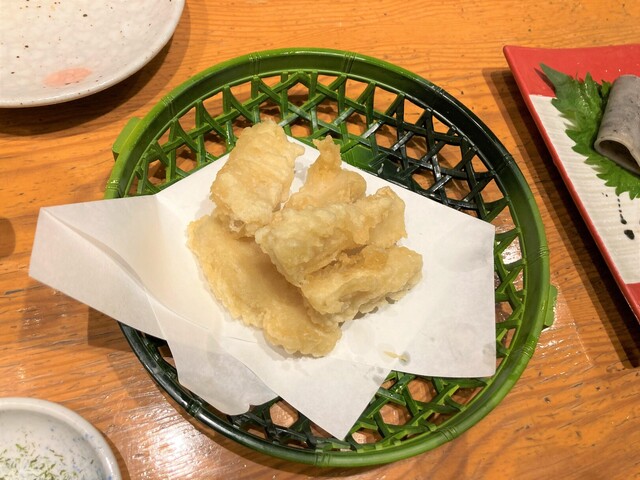
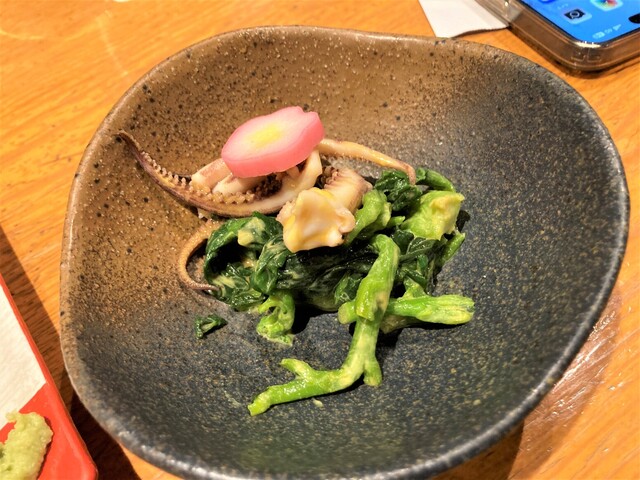
This restaurant, located close to Chidamagata Station, is quite decent in terms of both its cuisine and soba. I visited this place after a long time, and this time I ate the following dishes: tempura with bamboo shoots, udon with flower sprouts, soba nukama, and sashimi with salmon. Since we were three people, including a young member who had a strong appetite, we enjoyed various alcoholic drinks and appetizers. The selection of Japanese sake is also quite extensive. It’s definitely not cheap, but... The finale was the restaurant’s signature dish: sesame-soba. Black sesame was mixed into the dough of the soba, giving it a dark gray color. The taste of sesame was also prominent. Although the restaurant has a long structure, there are some areas where the staff’s attention to customers seems lacking. Nevertheless, the overall atmosphere is calm and elegant, making it a place worth visiting.
If one wants to eat both soba and dishes, this is a perfect choice.
A soba restaurant near Chidamae-kyo Station. It's a store located underground. Since soba is my favorite food, I decided to try all the shops that are nearby from my home. This is part of that effort.
The interior of the restaurant features a folk-art style that incorporates many trees. At night, it can also be used as a Japanese bar, so there are plenty of tables available. It has a suitable size for such a setting.
I sat at a counter seat and ordered a lunch meal consisting of sesame soba and salmon rice. The price was around 900 yen.
The soba here is completely black. It's probably because sesame oil has been mixed into it. Of course, sesame oil is good for health, but it's impossible to capture its full flavor by using just a small amount of it. So this idea is quite useful. However, in this case, the natural aroma of the soba itself may be lost. Since it's cut into pieces, it's clear that it's soba. But if you want to truly experience the flavor of the soba itself, it might not be the best choice for those who prefer the original flavor of the soba.
I don't really care too much about that. Sometimes, I just think that such soba noodles are quite good.
The side dish of salmon rice is simply salmon cut into flakes. It’s garnished with seaweed and wakame. It’s a pity that the salmon doesn’t have a distinct texture. It would be better if it were cut into smaller, more uniform pieces like sushi. That way, the texture would be more enjoyable.
However, overall, it’s a healthy content. Not bad at all.