Night in Hirosaki. I really wanted to try local dishes, but since I stayed at a hotel right in front of the train station, there wasn’t any good local restaurant nearby. To get to the bustling area, I had to take a bus, and I didn’t have the energy to do that at this time. So I asked the hotel staff for advice. They suggested “Sakura-yama”. It’s just an izakaya, but they claim to serve local dishes as well.
It took about 2 minutes to arrive from the hotel. The izakaya is located on the 2nd floor of a building. I felt uneasy, thinking that perhaps the cleaning in this building wasn’t done properly… But I entered the place with some relief. The staff were very friendly, which made me feel better. The interior was divided into a counter area and private rooms. Even at such an early hour, there were quite a few customers in the private rooms.
I was led to a counter. There was a box of tissues placed there in a rather careless manner, as if they had just been bought (laugh).
Since the name of the restaurant is "鮪山", it seems to be a place that boasts about its tuna dishes. It seems that the owner himself is an avid fisherman, and there are photos of the fish he caught displayed in the restaurant.
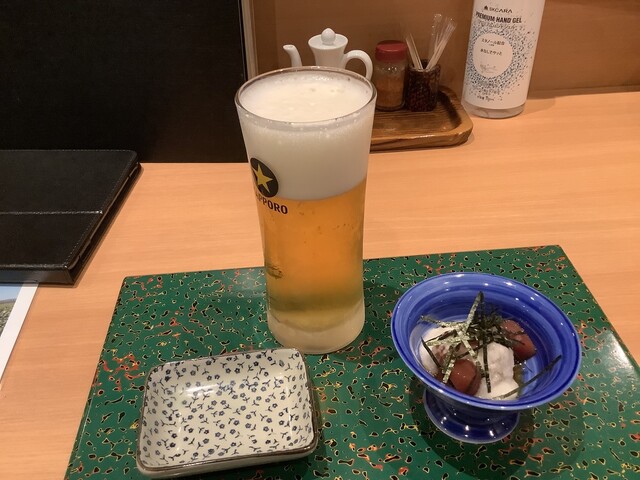
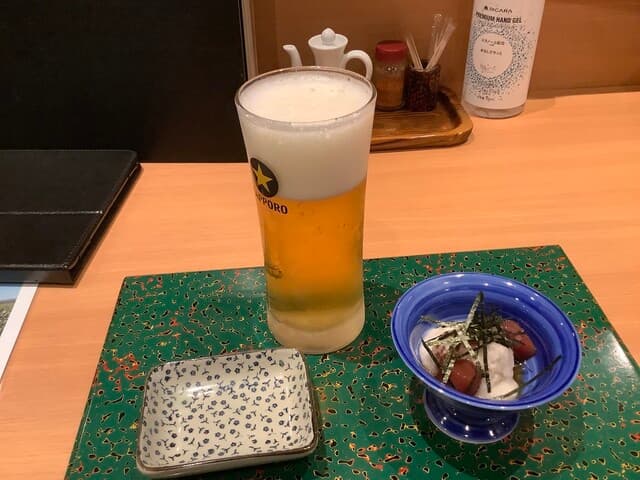
As soon as I sat down, the "お通し" appeared first. It was "鮪の山かけ". Indeed, it's a shop specializing in salmon, and even though it was an "お通し", it was quite luxurious! But I was surprised to find that I had to pay 550 yen for it (laugh). I don't really understand the rules in eastern Japan, but it seems normal for "お通し" to cost more than 500 yen. I haven't had much experience with izakayas in western Japan. But this place is known for its fresh fish and seafood dishes. Since I didn't order any such dishes, it was a good choice from the menu's perspective.
The orders placed were as follows. It consists of a selection of local dishes. The ordering process at this restaurant is via touch screen. While it's convenient, there is a downside—you cannot get recommendations from the staff.
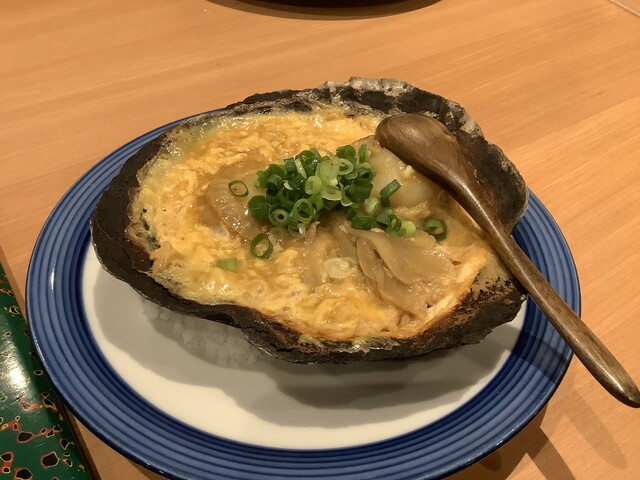
●「帆立の貝焼き味噌」(880円)
A local dish that has been passed down in Tsugaru and Lower North regions. It involves using natural abalone with a diameter of about 20 centimeters in the pot. A small amount of water is added, along with dissolved mirin. Once the liquid boils, the abalone, fish fillets, mushrooms, etc. are added. Finally, green onions are added, and the dish is sealed with eggs. This is the standard method of preparing this dish.
“(略)アンコーのフライと、それから卵味噌のカヤキをご用意します。これは津軽では食べられない一品です。そうです。卵味噌だけです。卵味噌に限ります。卵味噌です。” (太宰治『津軽』より)
This is a dish that appears in the novels written by Tazawa Tsushigaki, a writer from Tsugaru. If you’ve come to Aomori, you definitely should order this dish. (Laugh)
I thought it would be a more intense-flavored dish, but surprisingly, it was quite light in flavor. It felt more like the flavor of the shellfish over that of the miso.
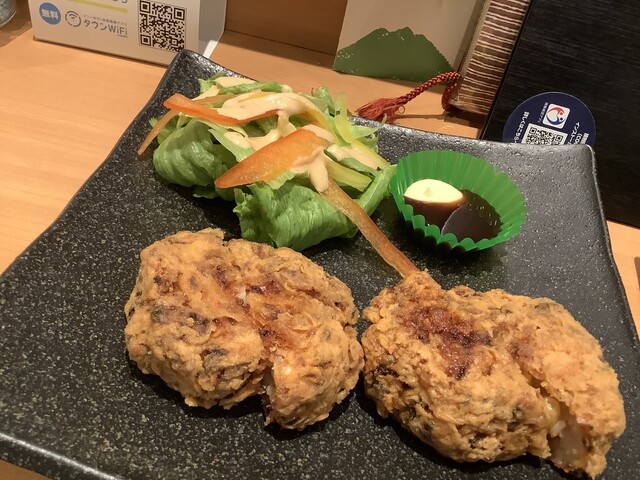
●「いかめんち」(660円)
This is a traditional home-cooked dish that was served in the Tsugaru region, especially in the inland town of Hirosaki. It involves mixing rice with vegetables using a knife, then flattening it and cooking it on a steel plate coated with plenty of oil. The result was a crispy and delicious dish. It was so crispy that I actually wondered if such a crisp food could really exist… (laughs).
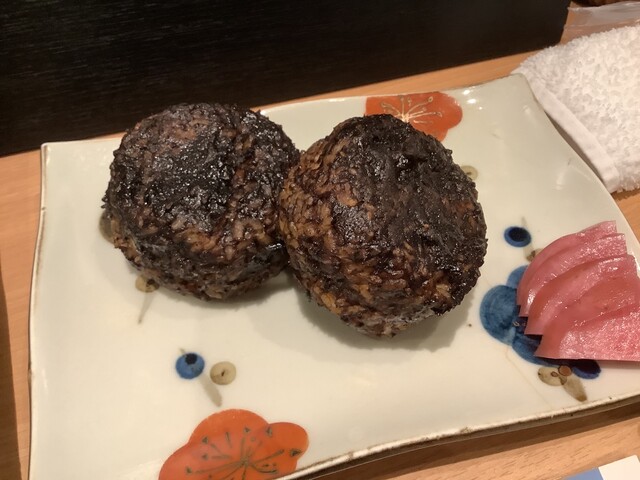
●「みそ焼おにぎり」(330円) 結局、どんな高価な料理よりも“おにぎり”が一番美味しい。
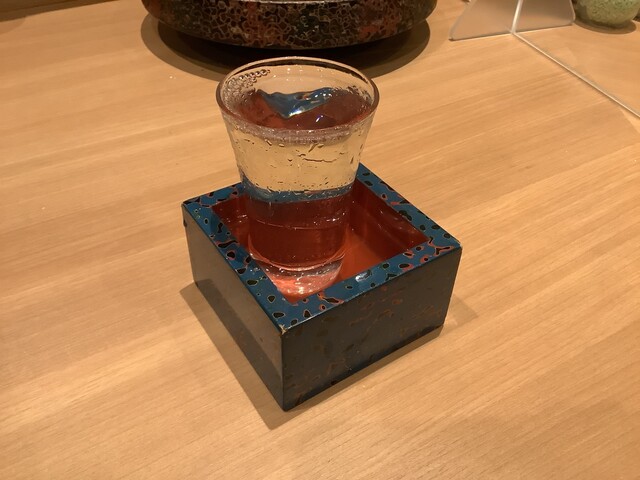
Since we are enjoying such a variety of local dishes, it's natural to choose local sake as our beverage. I ordered "Junmei Nisshō, Shirakami Romanan Ban". This is the sake produced by the "Maru-Tsuba Saké Distillery" in弘前市, which has been operating as a craft brewery for 14 generations since its establishment as a merchant for the Tsugaru Domain. It's a refreshing and moderately strong sake.
I ordered a glass of raw beer, which cost 3,740 yen per person. It was a very affordable yakitoria.