010/200
Just a short walk from the Mejiro Station on the subway. As I proceed through the alley, feeling the noise of the bustling streets, a dignified Kyoto-style house appears before me. That is the store called “Wago Koro Izumi”.
Christmas isn’t something I enjoy eating Western food; I prefer Japanese cuisine. This year, during Christmas 2025, I spent the holiday in Kyoto, enjoying Kyoto-style cuisine.
The moment you step through the warm curtain, a quietness that seems like a lie compared to the bustling outsideness, and the faint scent of incense.
My husband, Tsuruki Izumi, hails from the renowned restaurant "Sakurada," which closed its doors in 2015. The name of his new restaurant, "Wagokoro Izumi," embodies his passion for Japanese cuisine. Beyond the food itself, he wants to convey a sense of seasonality through every aspect of the space—the decorative items on the tatami floor, flowers, utensils, and decorations. This is a true expression of the essence of Japanese cooking.
As you sit at the counter, you experience a pleasant sense of tension that makes your spine stretch out, along with a warm feeling that somehow brings you comfort.
First, let's start with the alcohol.
And, the dashi is truly soothing.
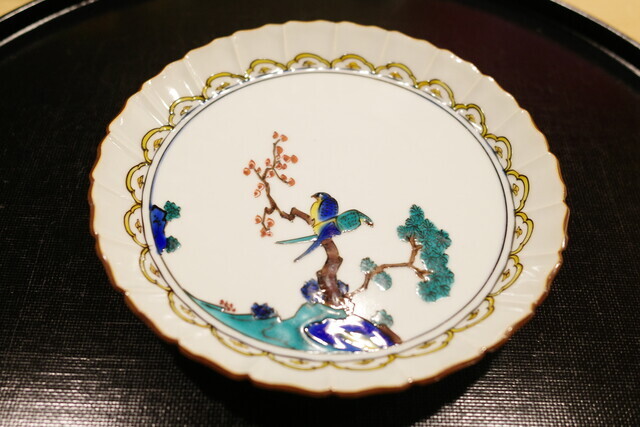
The meal has begun. The serving dish features a snake design, representing the Chinese zodiac.
First, what was served was a stew of Nisshoku, the representative winter Kyoto vegetables.
The crisp texture is enjoyable, and the addition of the dried Japanese yuzu peel adds a refreshing accent to the dish.
A plate of radishes that have been thinly sliced and cut into pieces, along with radishes that have absorbed the broth from the oden.
This hand-sized dish.
Upon opening it, I found a dark-colored radish inside. The broth that took over a week to prepare was so rich and flavorful. This is the first time I've encountered such a delicate radish.
Next, the bowl of sweet potatoes is served.
The moment the lid was opened, the steam billowed out, along with the most exquisite aroma of the broth. As it entered the mouth, it was fluffy and smooth, gradually melting away. It had a gentle yet powerful umami flavor that permeated every corner of the body.
This is a selection of grilled dishes.
The bonito tuna is cut into thick slices, resembling angular cuts. The rich, creamy sweetness of the fat that melts in the mouth is simply irresistible.
This winter is the prime season for cold bonito, and the richness of its fat is truly outstanding. When enjoyed alongside kombu and red date, the alcohol becomes even more intoxicating.
Aoiika, adorned with intricate decorations using a finely crafted knife. Through this meticulous process, a sticky sweetness is maximally enhanced.
The white-tipped tuna is also very tender.
This sushi made with duck meat has a perfect balance between the juicy flavor of the duck and the vinegar-based rice.
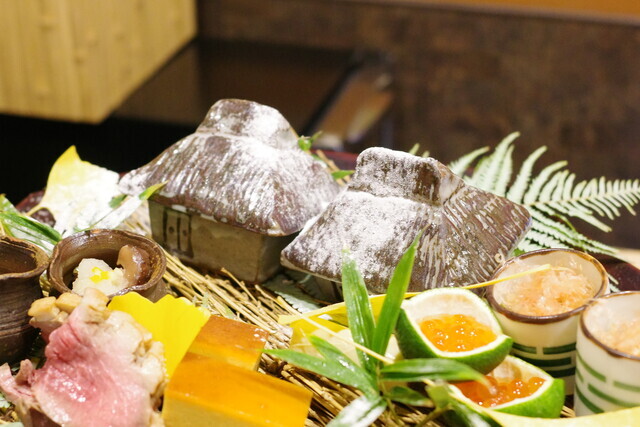
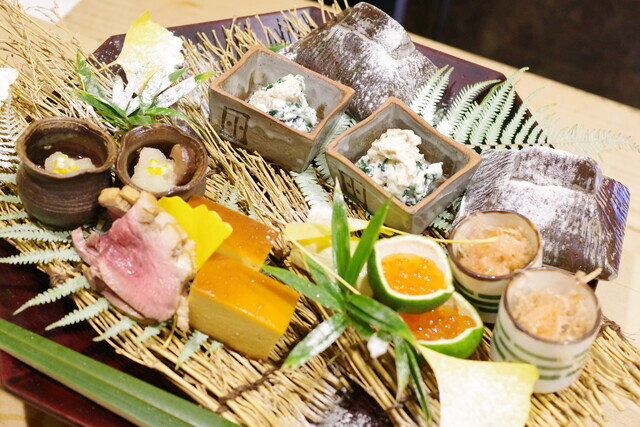
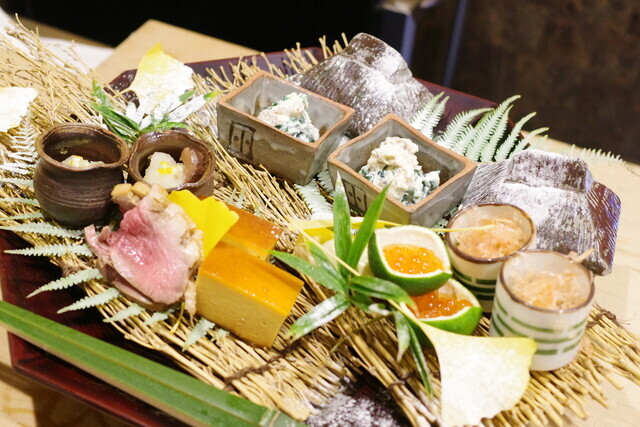
And it's called "Yatsushoku".
The theme is truly a snowy landscape. On the table, there stands a house made of pottery, with hands-shaped structures. The entire surface is adorned with powdered sugar and rice flour, creating a snowy appearance. Additionally, the use of straw adds a touch of realism to the tranquil winter scene.
Between those snowy scenes, there are delicious appetizers.
In the柚子釜, filled with the juicy contents of the柚子, there’s plenty of ikura. It’s the soft and tender duck roe that is a must-have in Kyoto during winter. The omelette has a delicate sweetness, reminiscent of kastella, and it’s filled with shrimp and fish minced meat. In the back corner, there’s a neatly prepared white stew, and also a refreshing namas.
All of them have an excellent compatibility with Japanese sake. I enjoyed enjoying the winter scenery while sipping these drinks slowly, with both my eyes and my tongue.
The baked dish is "Abalone Steamed with a Moist Crust".
A fragrant aroma that stimulates appetite.
We enjoyed local sake from Kyoto.
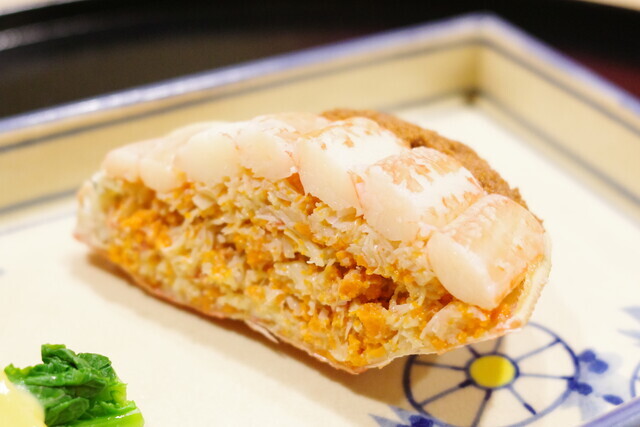
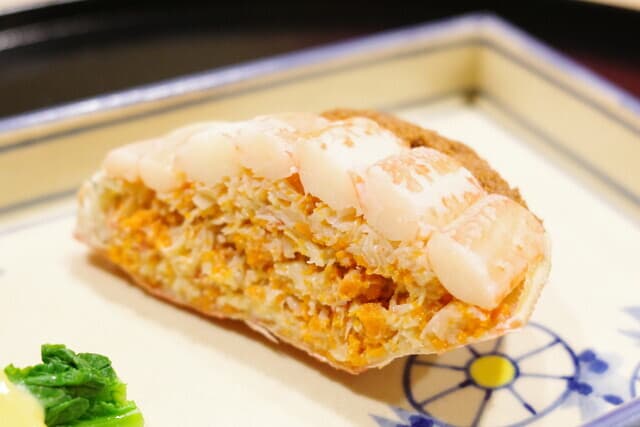
And what appeared was my favorite dish, "Kouka-gani".
This female giant crab is a precious taste that can only be encountered during a short fishing season.
Carefully relaxed body, with the internal and external parts of the shell beautifully arranged together, this creature truly resembles a winter treasure box.
The outer part has a soft, pliable texture that bursts open; the inner part is an orange-colored substance with rich and sticky umami flavors that cling to the tongue. The inner part of the crab is delicate and full of sweetness.
If you try to peel it yourself, it's a very difficult task with the fragrant crab shell. But thanks to the skilled hands of the craftsmen, it can be prepared in the most delicious state. This is truly the epitome of luxury.
Next, the dish served was Kyoto's winter staple, "Kabocha Steamed."
The soft sweetness of the mashed broadleaf vegetables, combined with the thick silver filling, gently resets the taste in your mouth. It’s a healing dish that warms your cold body from the inside out.
The conclusion of the meal was a "soybean rice" cooked in an earthen pot.
The crisp texture of soybeans and the sweetness of rice are fully revealed with each bite.
The consideration to turn the remaining rice into onigiri and give it to them is a kindness that truly comes from the heart of someone like Washukoro Izumi.
Not only is the taste of the dishes excellent, but also the dedication to using high-quality ingredients like the "Kagoshima-ni," as well as the meticulous craftsmanship, truly reflect Mr. Izumi's passion.
In the end, enjoy a leisurely tea time.
The service was warm and the staff were kind. The food was also carefully prepared and delicious. It was a wonderful Christmas Eve.
I would like to visit again when the season changes. Thank you for the delicious meal!