This is a Taiwanese restaurant located at the south exit of Shinjuku Station.
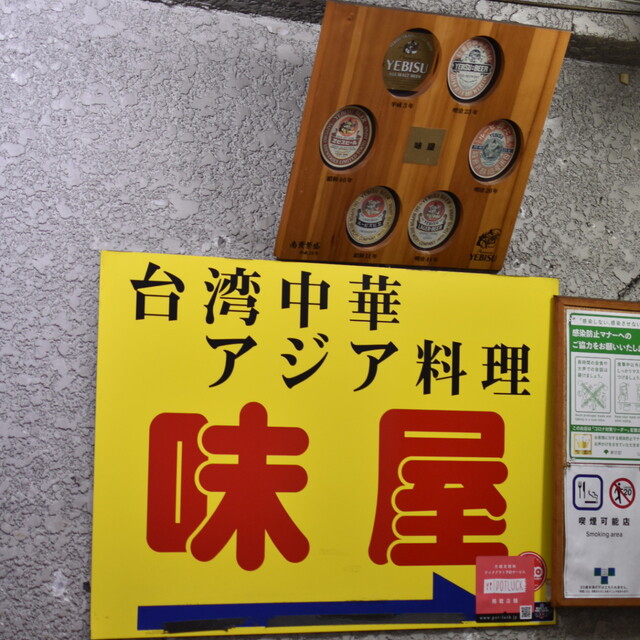
The restaurant is located on the third floor of a mixed-use building. Looking up at the building, you can see a sign with yellow background and red writing.
At the entrance of the first floor, food samples are arranged on trays, creating a menu display. The area looks somewhat messy, but it clearly indicates where the restaurant is located.
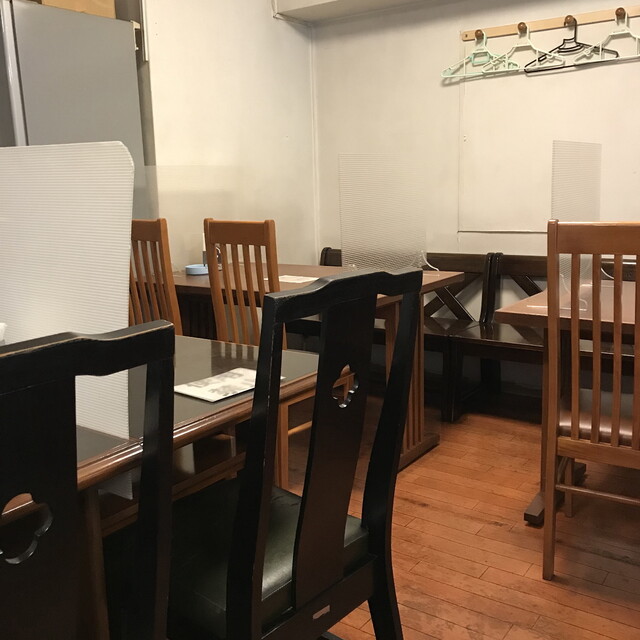
As you descend the elevator, you will immediately arrive at the entrance of the restaurant. Upon entering, you will find a space that resembles a dining area, with tables arranged in various rows.
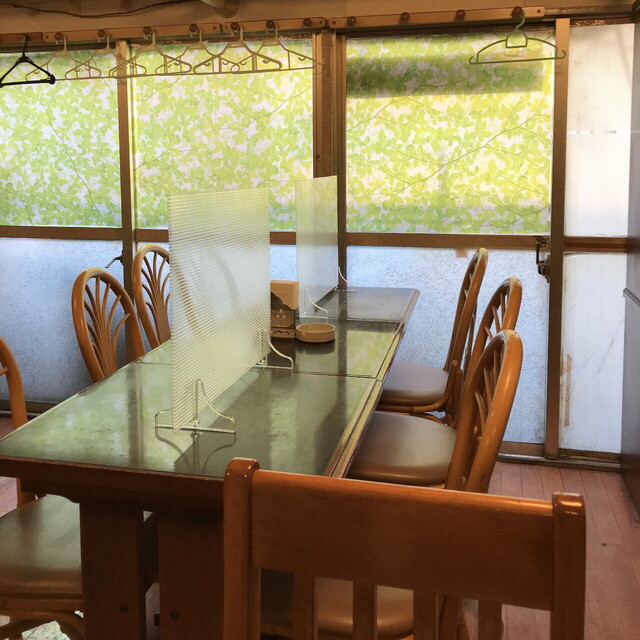
This restaurant has a sense of age and a somewhat chaotic appearance. However, the infection prevention measures are well implemented, with proper partitions in place. The large tables are designed for one-person seating, with markers indicating where people should sit opposite each other.
It's quite rare these days to find a place where smoking is allowed. There seems to be a tendency for smokers to gather here, so non-smokers might want to avoid this place.
The menu offers fixed-price Chinese dishes starting at 780 yen, and noodle dishes like green-on-green ramen start at 700 yen. There is a wide variety of options available.
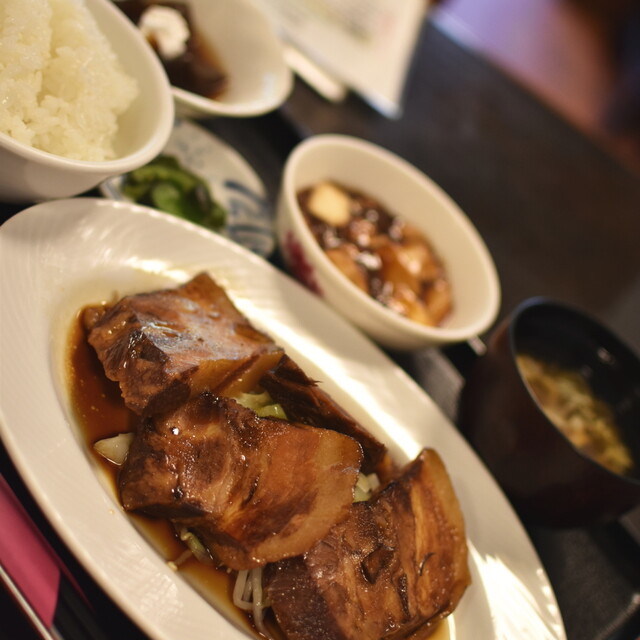
This set meal includes one lunch and one soup per person, with half a chaehan being added to the noodles. It offers a substantial portion for the price. Considering it's located in Shinjuku, this is a relatively affordable option for lunch.
I thought it was a lunch menu, but it seems that it can also be eaten at night.
Rather than being a specialized Taiwanese cuisine, it seems to be more of a standard Chinese cuisine prepared by people from Taiwan.
What was received is,
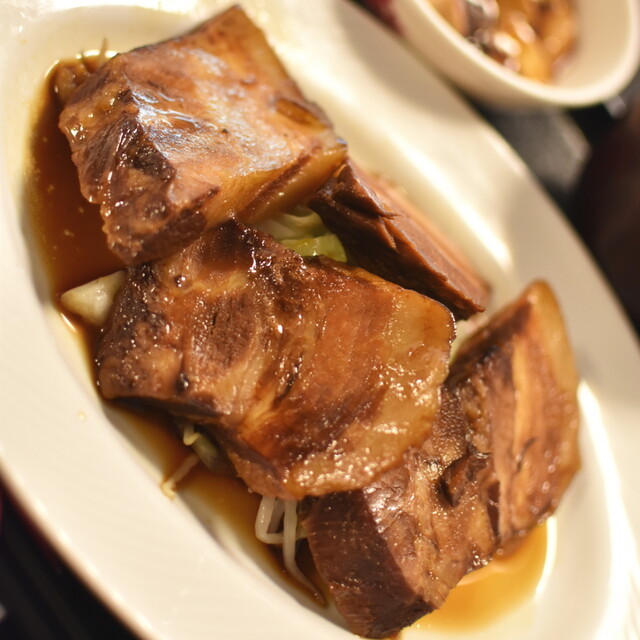
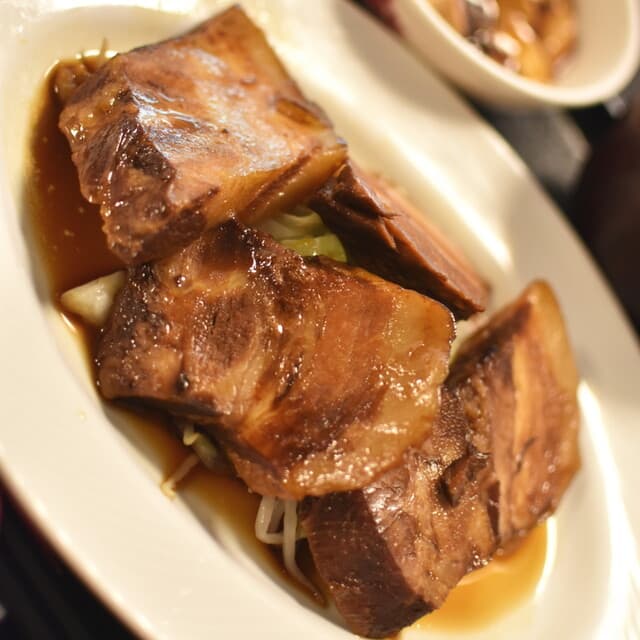
■豚肉角煮(紅焼肉)(880円)
It is said to be the number one menu among the popular items in the restaurant.
However, surprisingly, most of the other customers did not order anything. It seems that they recommended certain dishes as their favorites to the staff.
The main pork stew is made by slicing large pieces of meat and simmering them together. We use boneless pork loin, and the way the ingredients are handled is very authentic. However, the seasoning is adapted for Japanese taste preferences. The aroma of the five-spice powder is weak, and it doesn’t have the flavor typical of Japanese soy sauce. In other words, it feels like a pork stew that doesn’t quite match Japanese culinary traditions.
While it may not be enough for Chinese cuisine enthusiasts, I believe this restaurant offers excellent taste in an office environment, making it suitable for serving various people.
Under the cutlet of meat, there is a layer of tofu made from mung beans, onions, and cabbage. It provides a balanced diet, isn't it?
As a side dish, we are served Mapo tofu. It lacks the spiciness of chili peppers and the numbing effect of Sichuan peppercorns. The spiciness comes from the Doubanjiang sauce, while the umami of tofu also contributes to its flavor. This is quite different from the stimulating Mapo tofu that is popular in Japan today. However, it still has a taste reminiscent of Chinese cuisine from Guangdong and Taiwan. I think it’s not bad at all.
The rice comes in the standard size of a tea bowl. The side dishes are quite abundant, so those who want to eat more can order additional items.
The soup has a mild flavor with dissolved eggs included.
This is a pickled vegetable from Japan.
The dessert was also included, with a coffee that had a mild sweetness, topped with cream.
The service at this Chinese restaurant is typical of such establishments. A friendly and cheerful manager greets customers with enthusiasm and handles all matters with efficiency.
While it differs from authentic Taiwanese cuisine, I believe the lunch is well-prepared and worth the price.
The menu seems to be lacking in elaborate items, which might make it difficult to use for banquets. However, if used for dining, it is moderately delicious, affordable, and offers a good amount of food, making it an excellent restaurant.